How Australia are measuring Test runs in challenging era: A new approach

Contents
The Changing Landscape of Test Cricket
Context is king. That is the message Australia’s coaching staff is emphasizing as the national team prepares for a massive 12-month window of Test cricket. With a demanding schedule that includes 20 Test matches, spanning from a clash against Bangladesh in Darwin to high-stakes tours in South Africa, India, and England, the Australian side is looking to maintain its position at the pinnacle of the World Test Championship.
The Data Dilemma
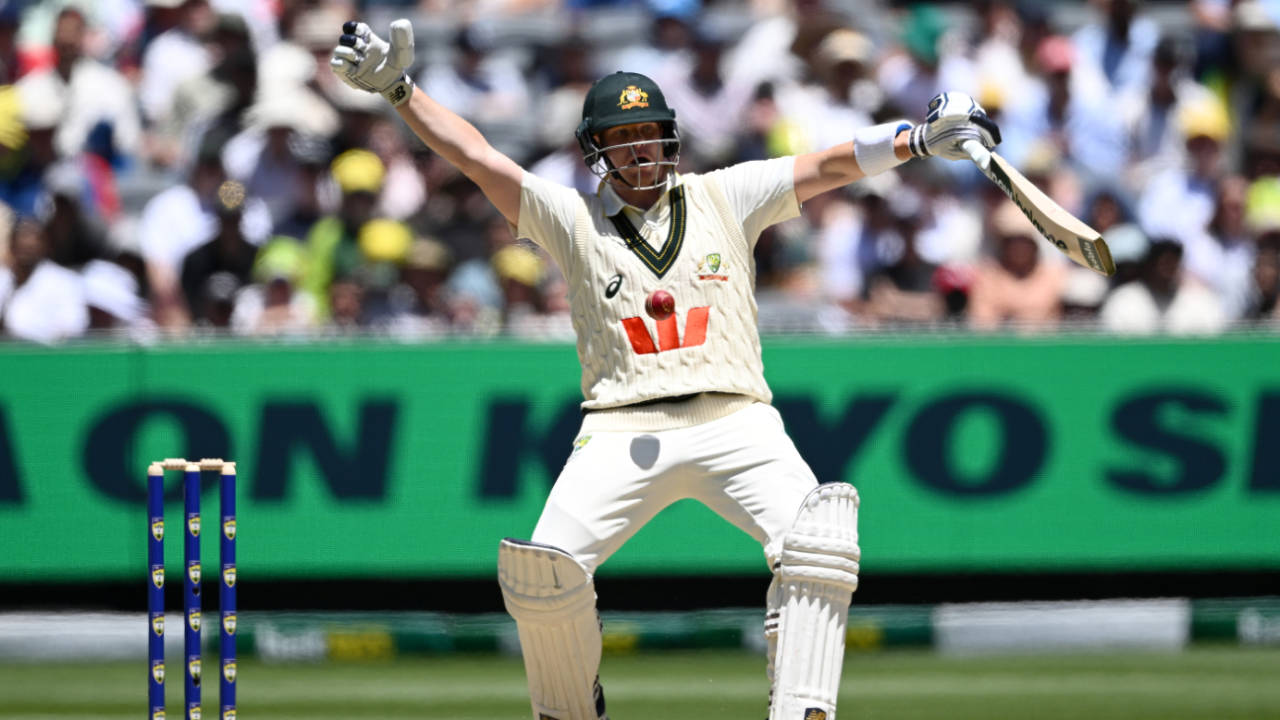
Public pressure has been mounting on key batters. Marnus Labuschagne, for instance, has struggled to find his rhythm, averaging just 25.75 in his last 21 Tests. Similarly, Cameron Green and Jake Weatherald have faced intense scrutiny regarding their output. However, head coach Andrew McDonald is calling for a paradigm shift in how these performances are evaluated.
“We measure in terms of percentage of runs of the team’s total and their impact in games,” McDonald explained. He argues that traditional batting averages can be misleading in an era where conditions heavily favor the bowler. According to the coaching staff, even the greats of the game have seen their averages decline globally, a phenomenon not limited to the Australian squad.
New Metrics for a Modern Game
Working alongside team data analyst Tom Body, the coaching staff has conducted a deep dive into alternative performance indicators. By comparing the current side to the legendary Australian team of 2001-2004, the staff aimed to determine if modern players are underperforming or simply navigating a tougher era. The results were revealing: while raw averages for the current squad are lower than those of the early 2000s, the “percentage of team runs” contributed by individual batters remains remarkably consistent across generations.
The team is utilizing two specific metrics:
- Median Percentage: Represents a player’s typical share of the team’s total in a single innings.
- Carry Percentage: Measures how often a player scores more than 25% of the team’s total in a single innings.
By using these tools, the staff has found that players like Cameron Green and Alex Carey are contributing at levels comparable to giants like Steve Waugh and Adam Gilchrist, even if their raw averages differ significantly. This data-driven approach aims to filter out the noise of external criticism and focus on how a player contributes to the team’s ultimate objective: winning.
Domestic Challenges and Future Talent
The conversation extends to the Sheffield Shield, where domestic coaches are also grappling with low scoring trends. Recent data shows that seam bowlers in the domestic circuit have been enjoying massive success, with many averaging under 20. This reflects a broader trend across the sport where batting averages have dipped, while bowling efficiency has soared.
Despite the dip in traditional statistics, McDonald remains confident in the talent pipeline. He emphasizes that the quality of the domestic system remains high, even if the wickets are proving to be more challenging than they were in the past. “I think the talent’s there. The domestic competition is strong, and most of the rest of the world acknowledges that our domestic system’s strong as well,” McDonald noted.
Conclusion: Valuing the Contribution
While the scrutiny on individual averages is a constant in the high-pressure world of professional cricket, the Australian camp is clearly looking beyond the surface numbers. By focusing on impact, context, and situational contribution, the coaching staff is creating a more resilient and objective framework for player development. As Australia continues its hunt for a third successive World Test Championship final, this analytical approach may well be the differentiator that keeps them ahead of the curve.