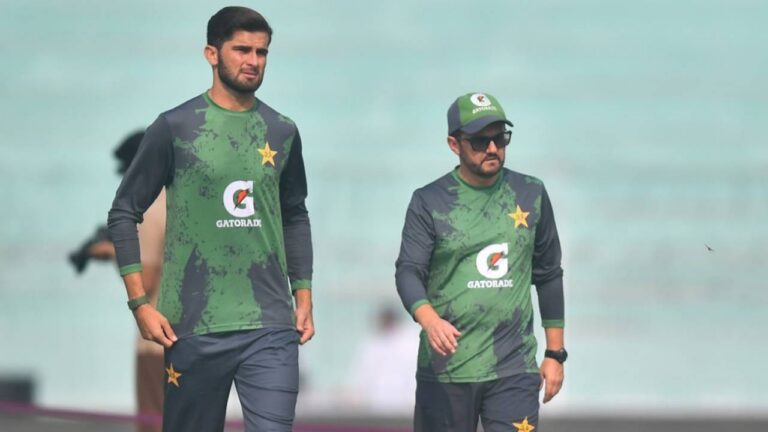
Jacob Bethell Stance Leads To Massive Fight Between England and Australian Legen – Cricket Legends Clash: Pietersen, Cook, Gillespie Debate Jacob Bethell’s IPL Role


The perennial debate of franchise cricket versus country commitments has once again ignited a fierce confrontation among cricketing greats. This time, the focal point is young English talent Jacob Bethell, whose role in the Indian Premier League (IPL) has sparked a heated exchange between former England captains Kevin Pietersen and Alastair Cook, with former Australian pacer Jason Gillespie wading into the fray with his characteristic bluntness.
Jacob Bethell, currently a part of the Royal Challengers Bengaluru (RCB) franchise, has found himself warming the bench, with the team opting for established openers like Phil Salt and Virat Kohli. This situation led to former England captain Alastair Cook raising a pertinent question about Bethell’s development, suggesting a return to county cricket could be more beneficial for the young player’s progress and England’s future.
Contents
- 1 Alastair Cook’s Call for County Cricket Return
- 2 Kevin Pietersen’s Fiery Rejection: “Stay in India, Jacob!”
- 3 Jason Gillespie Enters the Fray: “Give Me a Break, You Muppet!”
- 4 The Everlasting IPL vs. Country Debate
- 5 The Undeniable Benefits of IPL Exposure
- 6 Conclusion: An Unresolved Modern Cricket Conundrum
Alastair Cook’s Call for County Cricket Return
Cook, known for his steadfast dedication to Test cricket and the county system, expressed his concerns on the “Stick to Cricket” podcast. His argument centered on the idea that while the IPL environment offers valuable exposure and learning opportunities, it cannot substitute actual match practice and the grind of first-class cricket, especially for a player not regularly featuring in the playing XI.
“He’s sitting at IPL doing nothing,” said Alastair Cook.
“Jacob Bethell shouldn’t really be there because he’s not opening. He’s sitting at the IPL, not doing anything. Ideally, he could come back and open for Warwickshire to help England,” Cook stated, implying that Bethell’s time would be better spent honing his skills on the field for his county, Warwickshire, contributing to their championship campaign and, by extension, strengthening the pool of talent for England.
Cook’s perspective highlights a traditional view of player development, emphasizing the importance of consistent match exposure, adapting to different conditions, and accumulating significant playing hours – elements he believes are crucial for a young talent like Bethell to flourish and eventually represent England at the highest level.
Kevin Pietersen’s Fiery Rejection: “Stay in India, Jacob!”
However, Cook’s former England teammate and ex-captain, Kevin Pietersen, vehemently disagreed with this sentiment. Pietersen, a staunch advocate for the IPL since its inception in 2008, fiercely rejected Cook’s suggestion. Pietersen’s history with the IPL is well-documented; he famously clashed with the England and Wales Cricket Board (ECB) early in his career to participate in the league, believing it offered unparalleled learning experiences for English players.
Having played for and even captained Royal Challengers Bengaluru himself in the IPL 2008, Pietersen’s support for the league stems from his personal experience. He argued that even without playing matches, the sheer experience of being in an IPL dressing room alongside global superstars, observing their routines, and understanding their approach to high-pressure situations, is an invaluable education for any young cricketer.
“Alastair Cook has absolutely NO IDEA what it’s like to be in the IPL,” Pietersen asserted on X.
“Stay in India, Jacob. Even though you’re not playing, you’re learning and will be a way better player,” Pietersen advised Bethell, directly countering Cook’s viewpoint and going as far as to accuse his former captain of lacking understanding of the IPL’s profound developmental benefits. For Pietersen, the immersion in a world-class environment, even from the sidelines, offers a unique form of mentorship and accelerated learning that traditional county cricket might not replicate as effectively in certain aspects.
Jason Gillespie Enters the Fray: “Give Me a Break, You Muppet!”
Just when the debate seemed confined to former English captains, former Australia pacer and Pakistan head coach Jason Gillespie jumped in, adding a new layer of intensity to the discussion. In an interaction on “The Fast Bowling Cartel” podcast with fellow Australian greats Glenn McGrath and Damien Fleming, Gillespie lambasted Pietersen’s dismissal of Cook’s arguments, injecting a dose of characteristic Australian wit and bluntness.
Gillespie ridiculed Pietersen’s critique of Cook, highlighting what he perceived as Pietersen’s arrogance in dismissing a valid point. “The nerve of Sir Alastair Cook to suggest something like that. KP has gone off the deep end and stated that Sir Alastair Cook’s opinion doesn’t matter because he’s never been to the IPL and would not know,” Gillespie sarcastically remarked, defending Cook’s reasonable perspective.
“Give me a break, you muppet,” Gillespie blasts Pietersen.
“I think Sir Alastair Cook had a valid point, but the way KP absolutely hammered him for having an opinion—give me a spell, boys. Absolute nonsense,” Gillespie insisted, emphasizing that Cook’s initial observation about Bethell needing match practice was entirely justifiable. He further mocked Pietersen’s often-repeated assertion that he ‘paved the way’ for players to prioritize lucrative franchise cricket over international duties, painting Pietersen’s motivations as primarily financial.
“He reckons he would have played 150 Tests or more. He’s the one who paved the way. Thank you, Kevin, for the stars above, the sun, the moon, the earth we walk on, and the air we breathe. It was all about cash for you, Kev. Give me a break, you muppet,” Gillespie concluded his scathing attack, delivering a memorable jibe that highlighted the deep-seated divisions in opinion regarding player allegiances and the commercialization of cricket.
Image Credits: AP/.X
The Everlasting IPL vs. Country Debate
The fiery exchange over Jacob Bethell’s situation is merely a microcosm of a much larger, ongoing debate in the world of cricket: the delicate balance between the allure of global T20 leagues like the IPL and the traditional demands of international and domestic cricket. This clash of priorities continues to challenge cricket boards and players alike.
Some boards, such as Cricket Australia and the England and Wales Cricket Board, have attempted to retain their top talents by offering lucrative central contracts and structuring schedules to minimize conflicts. This approach aims to incentivize players to prioritize national duties while still allowing some participation in franchise leagues.
However, other boards, notably those from South Africa and the West Indies, have faced significant challenges. Many of their top players have frequently opted out of international commitments to play in various T20 leagues worldwide, including the IPL. This trend highlights the growing financial power and appeal of franchise cricket, making it difficult for less affluent boards to compete for their players’ full-time allegiance.
The Undeniable Benefits of IPL Exposure
Despite the debates, the benefits for foreign players participating in the IPL are undeniable, particularly concerning their development in subcontinent conditions. Spending time in India, whether playing or observing, provides invaluable insights into playing on different pitches, understanding local strategies, and adapting to unique environmental pressures.
This exposure often translates into improved performance when these players face India in bilateral series or global tournaments held in the subcontinent. The practical experience gained, even from the sidelines, equips them with a deeper understanding and adaptability that can be crucial for their national teams’ success against challenging opponents like India in their home conditions.
Conclusion: An Unresolved Modern Cricket Conundrum
The Jacob Bethell saga, fueled by the strong opinions of cricketing legends, underscores that the IPL vs. country debate is far from settled. As the cricketing landscape continues to evolve, with new leagues emerging and player salaries soaring, boards and players will undoubtedly continue to navigate this complex terrain.
Finding a harmonious balance that allows players to benefit from the financial and developmental opportunities of franchise cricket while maintaining a strong commitment to international and domestic duties remains one of modern cricket’s most significant challenges. The passionate arguments from Cook, Pietersen, and Gillespie are a testament to how deeply this issue affects the sport’s identity and future.