Tilak Varma Records Slowest IPL Knock in Mumbai Indians History

Contents
A Night of Struggle at Eden Gardens
The 2026 Indian Premier League season has been one of immense frustration for the Mumbai Indians, and their recent outing against the Kolkata Knight Riders (KKR) at Eden Gardens proved to be a microcosm of their struggles. During the first innings, Mumbai Indians found themselves in deep trouble, but the spotlight turned sharply onto Tilak Varma, who played a knock that will be remembered for all the wrong reasons.
Tasked with rebuilding the innings after an early collapse left the team at 23/3, Tilak Varma entered the crease with the weight of expectation on his shoulders. However, the wicket offered significant assistance to both fast bowlers and spinners, and KKR capitalized on these conditions masterfully. As the partnership between Varma and Hardik Pandya attempted to steady the ship, it became clear that Varma was struggling to find his rhythm, failing to middle the ball throughout his stay at the crease.
The Record-Breaking Sluggish Innings
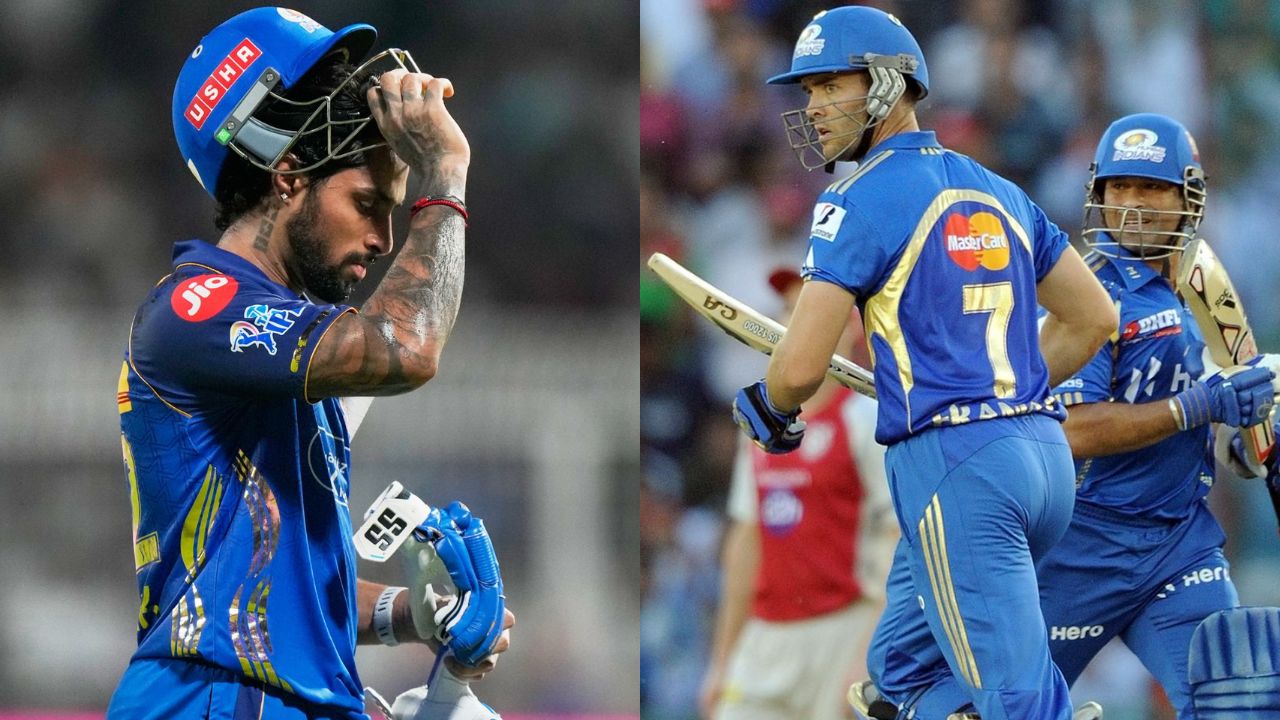
The statistics from Varma’s performance are stark. He was eventually dismissed for 20 runs off 32 balls, resulting in a strike rate of just 62.50. This performance officially entered the history books as the slowest strike rate for a Mumbai Indians batter in an IPL innings (with a minimum of 30 balls faced). By doing so, he eclipsed a 14-year-old record previously held by James Franklin, set back in 2012.
It was a painful watch for Mumbai supporters. While the pressure of the situation was undeniable, the inability to rotate the strike or find the boundary hindered the team’s momentum. By the time Varma was dismissed by Kartik Tyagi, Mumbai Indians had slumped to 84/5, effectively stalling any chance of a high-scoring start.
Reflecting on Mumbai Indians’ IPL 2026 Campaign
This match served as a stark reminder of the current state of the Mumbai Indians, who sit ninth on the points table and have been eliminated from the playoff race. Tilak Varma’s individual season has been a strange mix of potential and inconsistency. In 12 innings, he has accumulated 356 runs at an average of 32.26, including one century and two fifties. While these statistics may look decent on paper, they do not accurately capture the lack of reliability he has displayed when the team required stability.
As a senior member of the squad, the expectation is for Varma to act as an anchor, especially with the top-order struggling and inconsistent form plaguing other key players like Suryakumar Yadav. Unfortunately, his failure to convert starts into fluid, high-strike-rate innings has left the middle order exposed throughout the tournament.
A Late Resurgence
Despite the misery of the middle overs, the Mumbai Indians managed to post a somewhat respectable total of 147/8. This was largely due to a spirited 42-run partnership between Corbin Bosch and Deepak Chahar during the death overs. Kartik Tyagi, who was instrumental in keeping the pressure on earlier in the innings, conceded 19 runs in the final over, providing the Mumbai side with a glimmer of hope heading into the second half of the game.
On the bowling front for KKR, the figures were impressive. Saurabh Dubey, Cameron Green, and Kartik Tyagi each claimed two wickets, while the ever-economical Sunil Narine stifled the MI scoring rate, conceding a mere 13 runs in his four overs. For KKR, the stakes remain incredibly high, as they require a victory to keep their flickering hopes of an IPL 2026 playoff appearance alive.
The collapse of Mumbai Indians this season has been a collective failure, but individual milestones like Varma’s record serve to highlight the disconnect between the team’s talent and their execution on the field. As the season draws to a close, the franchise faces significant questions regarding their roster construction and strategy for the future.