Cricket vs Football: The Huge Prize Money Gap That Shows Which Sport Rules the World
Contents
The Financial Divide: A Tale of Two World Cups
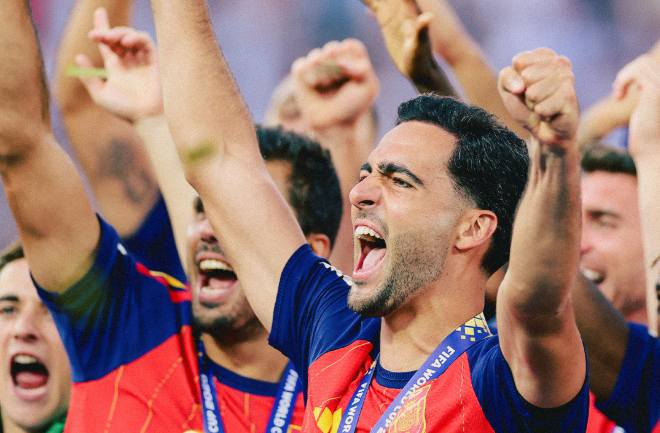
The sports world is often defined by its giants, and when we look at Cricket vs Football: The Huge Prize Money Gap That Shows Which Sport Rules the World, the numbers speak for themselves. Australia, after their remarkable victory in the 2023 ICC Men’s Cricket World Cup, walked away with a respectable INR 38.5 crore. However, when contrasted with the staggering INR 481.6 crore pocketed by Spain after their triumph in the 2026 FIFA World Cup, the scale of the difference is undeniable.
This discrepancy is not merely a matter of chance; it is a reflection of the global landscape of sports. While cricket retains a fervent and dedicated following in nations like India, Australia, England, and Pakistan, it functions largely as a regional powerhouse. Football, conversely, has transcended borders to become the world’s most universal language, boasting a commercial reach and fan base that currently remains unmatched by any other athletic discipline.
Scale and Scope: Quality vs. Quantity
The operational scale of these tournaments provides further insight into why the financial rewards differ so drastically. The 2023 ICC Men’s Cricket World Cup was a high-quality competition that featured 10 elite teams: India, Australia, England, South Africa, Pakistan, New Zealand, Sri Lanka, Bangladesh, Afghanistan, and the Netherlands. The round-robin structure ensured that the best of the best faced off, providing excellent entertainment for cricket enthusiasts, yet the tournament was essentially limited to a handful of cricketing nations.
In contrast, the 2026 FIFA World Cup represented a monumental shift in sporting history. By expanding from 32 to 48 teams, it became the largest sporting event on the planet. This expansion allowed nations from every corner of the globe—including Argentina, Brazil, Nigeria, Japan, the United States, and Morocco—to compete on the grandest stage. With 12 groups of four and a rigorous knockout structure, the sheer volume of participation highlights football’s total saturation of the international market.
Is Cricket Bridging the Gap?
While football currently reigns supreme in terms of global reach, cricket is not standing still. The sport is actively looking to expand its footprint and increase its inclusivity. The upcoming 2027 ICC Men’s Cricket World Cup is a testament to this growth, as it moves from the 10-team format to include 14 teams. This development is a necessary step to broaden the appeal of the game beyond its traditional strongholds.
The structure for 2027 is designed to add layers of intensity to the tournament. Out of the 14 participating teams, 11 will earn direct qualification, while the lower-ranked nations will face off in a preliminary ‘Super Series’ to secure the remaining spots. Following the group stages, the introduction of a ‘Super 7’ phase will lead into the semi-finals, aiming to maintain engagement throughout the duration of the event. Even with these improvements, the number of competing nations remains a fraction of those represented in the FIFA World Cup.
The Bottom Line
The reality is that while cricket is growing in stature and popularity, it is still playing catch-up to the sheer global volume of football. The prize money gap is the most visible metric of this difference, but it is supported by ticket sales, broadcasting rights, and the sheer number of countries where football is the primary sport. For cricket to close this gap, it will need to continue its current trajectory of expansion, bringing the game to new territories and increasing the number of nations that compete at the highest level. Until then, football remains the undisputed king of the global sporting landscape.