Pakistan’s famous cheerleader ‘Chacha Cricket’ to retire this year – Chacha Cricket: The End of an Era for Pakistan’s Iconic Superfan

Contents
The Final Bow for a Cricket Legend
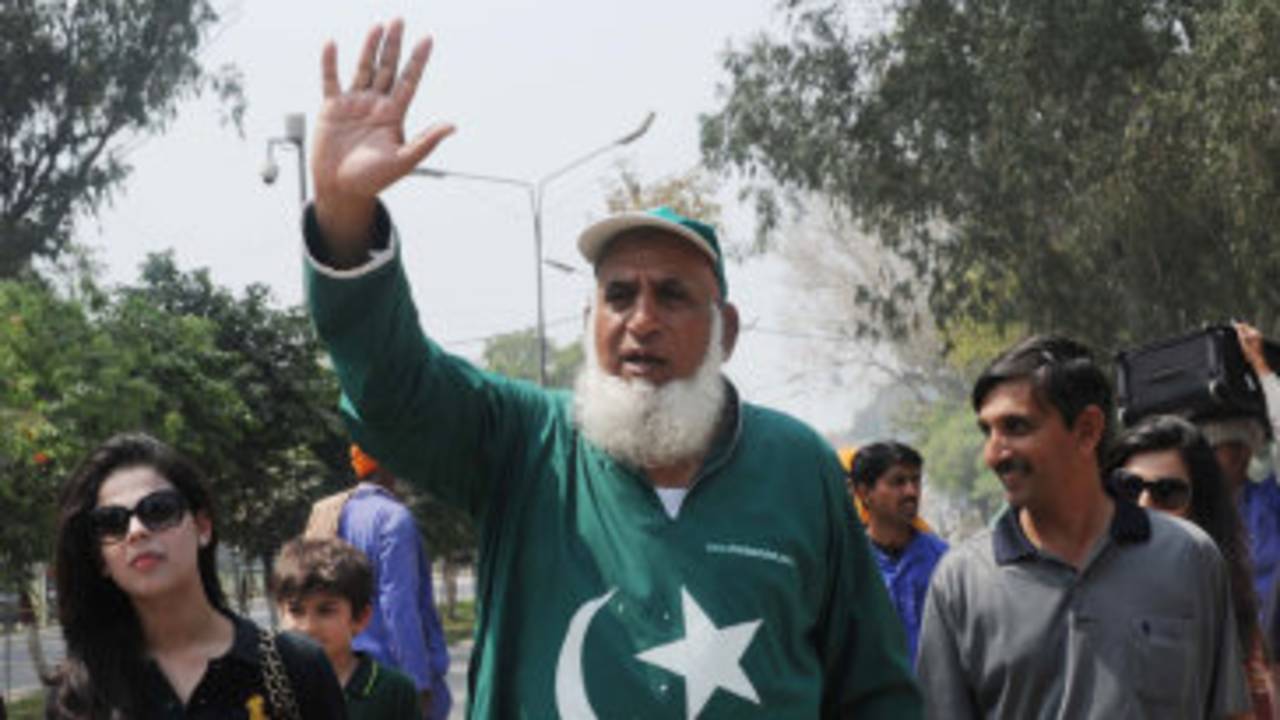
For over five decades, the sight of a man dressed in a distinct deep green kurta and a matching cap, waving the Pakistani flag with relentless enthusiasm, has been synonymous with the nation’s cricket journey. Abdul Jalil, globally recognized as Chacha Cricket, has officially announced that he will retire this year. The third and final ODI between Pakistan and Australia in Lahore is set to be the last time he cheers for his team on home soil, marking the end of a truly remarkable chapter in sports history.
A Journey Rooted in Passion
The story of Abdul Jalil is one of pure devotion. His fascination with the game began during England’s tour of Pakistan in 1968-69, where he first witnessed the magic of international cricket from the stands in Lahore. What started as a hobby soon turned into a life-defining mission. In the 1980s and 1990s, when Pakistan frequently played at the Sharjah Cricket Stadium, Jalil became a constant presence. His dedication was such that he famously quit his job in the UAE to become the team’s full-time mascot, a decision that cemented his status as a cultural icon.
Reflecting on his career, Jalil notes that he has successfully reached his personal milestone: cheering for Pakistan in 500 international matches. Having traveled across the globe to support the team, from the 1999 World Cup to various venues in England and beyond, he has lived through the highest highs and the lowest lows of Pakistan cricket.
Memories of Glory and Heartbreak
Jalil’s memory serves as an archive of Pakistan’s cricketing evolution. He vividly recalls the electric atmosphere when Javed Miandad hit that historic last-ball six against India in 1986. “I was on the ground when Miandad hit Chetan Sharma for a six,” he reminisced. “I remember him hitting it over deep midwicket as if it were yesterday.” He also cites the triumphant 2017 Champions Trophy victory at The Oval as one of his most cherished moments.
However, the journey has also seen significant heartbreak. He openly discusses the sting of the 2011 World Cup semi-final loss in Mohali and the recent struggles against India in New York during the 2024 T20 World Cup. “Wins and losses are part of the game,” he says, maintaining his philosophical approach to the sport even during Pakistan’s current slump, which has seen the team struggle across formats and endure difficult series against Bangladesh and India.
Life After the Stands
At 77, Jalil is ready for a new chapter. His post-retirement plans are as ambitious as his cheering career; he intends to open a restaurant and a dedicated museum on the outskirts of his hometown, Sialkot. This venue will serve as a sanctuary for the vast collection of memorabilia he has gathered over his decades of travel. Furthermore, Jalil is eager to pivot toward welfare work, aiming to use his status as a beloved public figure to contribute to his community.
Despite the current challenges facing Pakistan cricket, including a lack of recent tournament success and a difficult run in the World Test Championship, Jalil remains a beacon of optimism. He often reminds fans of his signature slogan: Hota hay bhai hota hay, khel mein aisa hota hay, kabhi agay kabhi peechay, kabhi khushi kabhi ghum, kabhi tum, kabhi hum. (Defeat is part of the game. Sometimes you are ahead of the opponent, and at times, they are. There are moments of happiness and sorrow in it.)
A Legacy That Transcends the Scoreboard
Chacha Cricket is more than just a fan; he is an ambassador of spirit. His presence has graced everything from local tapeball matches to high-profile wedding ceremonies, bridging gaps between fans and uniting them under the banner of sport. As he prepares to step back, the cricket fraternity acknowledges that the stands will feel a little emptier without his infectious energy. While he hopes to make a final appearance in England this summer for the Test tour, his formal retirement marks the end of an era for one of the most recognizable figures in the history of the sport.