Ambati Rayudu Raises Concerns: “He doesn’t have the same juice” – Ambati Rayudu raises concerns over Arshdeep S

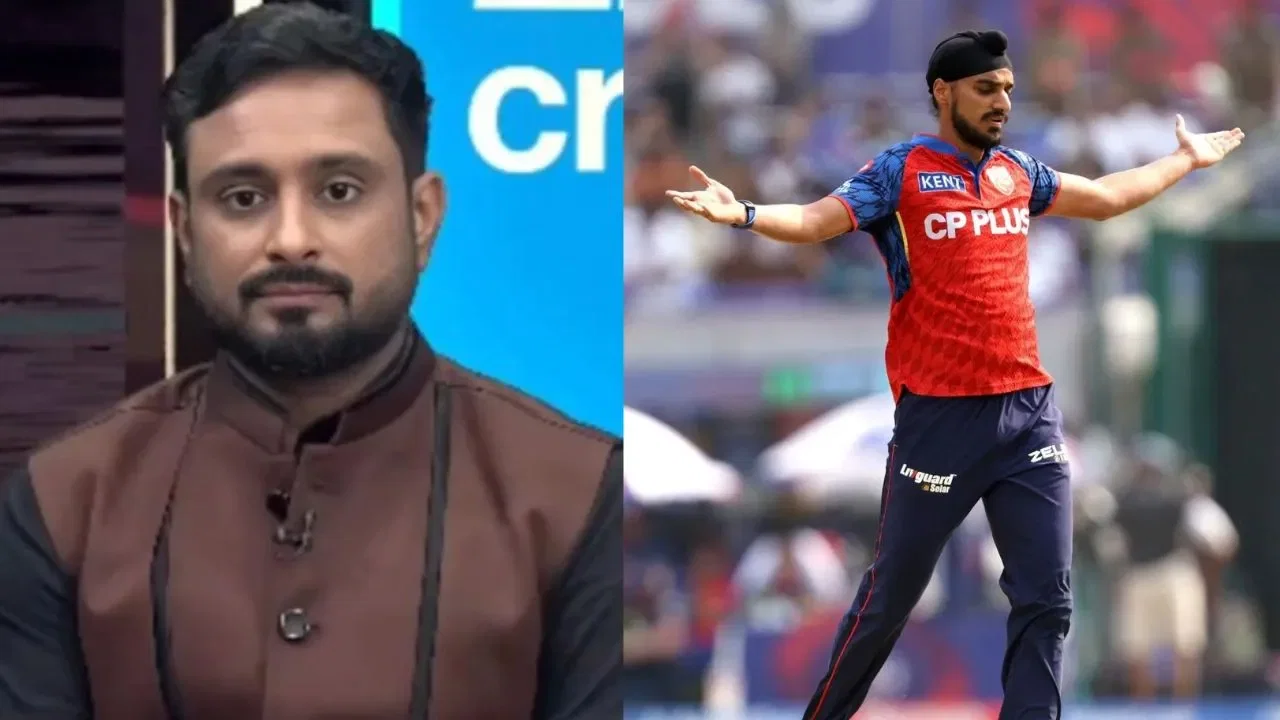
Ambati Rayudu Questions Arshdeep Singh‘s Form: “He doesn’t have the same juice”
Former international batter and a highly decorated six-time IPL champion, Ambati Rayudu, has recently voiced significant concerns regarding the performance of left-arm pacer Arshdeep Singh during the ongoing Punjab Kings’ campaign. Rayudu’s candid assessment points to a noticeable decline in Arshdeep’s usual intensity and effectiveness, suggesting that the young bowler might be grappling with both mental and physical fatigue. This perceived exhaustion, according to Rayudu, has directly impacted Arshdeep’s bowling lengths, a critical aspect of his game.
The discussion around Arshdeep’s form comes in the wake of Punjab Kings’ recent victory over Lucknow Super Giants (LSG) at the Ekana Cricket Stadium on Saturday, May 23. In a high-scoring encounter, PBKS successfully chased down a formidable target of 197 runs with two overs to spare, securing a seven-wicket win and breaking a six-match losing streak. Despite the team’s triumph, Arshdeep’s individual performance in that match notably fell short of expectations, further fueling the concerns raised by seasoned observers like Ambati Rayudu.
Rayudu Highlights a Lack of Sharpness and Intensity
Ambati Rayudu specifically pinpointed Arshdeep Singh’s physical condition as a primary area of concern. The former batter observed that the left-arm pacer currently appears to lack his characteristic sharpness and the fierce intensity that has made him a formidable presence in previous seasons. Rayudu emphasized that Arshdeep needs to make a crucial adjustment to his bowling strategy, advocating for him to bowl much fuller lengths to compensate for his current physical state.
“He should be mindful of that because his short ball, he doesn’t have a great bouncer at the moment, maybe because of his body being tired or he doesn’t have the same juice as what he did a few months back. But he definitely has to compensate. If he has to overcompensate, he needs to be full.”
This statement underscores a significant shift in Arshdeep’s bowling prowess, particularly concerning his bouncer. Rayudu’s analysis suggests a direct correlation between Arshdeep’s physical fatigue and his inability to execute his short balls with the same venom and precision he once possessed. To mitigate this, Rayudu’s advice for Arshdeep to bowl fuller lengths is a tactical suggestion aimed at maximizing effectiveness even when not at peak physical condition. It implies a need for strategic adaptation to maintain wicket-taking opportunities and restrict run-flow.
A Difficult Outing Against Lucknow Super Giants
Arshdeep Singh’s struggles were particularly evident in the match against Lucknow Super Giants. He concluded his spell with figures of 0/52 from just three overs, conceding runs at an alarming economy rate of 17.33. Such an expensive outing led to his captain opting not to bowl his final over, a clear indication of his performance issues on the day. This particular game served as a microcosm of his broader challenges throughout the season, where consistency and control have been elusive.
Tactical Advice on Bowling Lengths
Beyond the physical aspect, Ambati Rayudu also critically assessed Arshdeep Singh’s tactical approach during both the powerplay and death overs. Rayudu explicitly advised the left-arm pacer to refrain from bowling an excessive number of short deliveries. Instead, he strongly recommended a greater emphasis on executing yorkers and consistently hitting fuller lengths, strategies known for their effectiveness in containing aggressive batters and taking wickets in crucial phases of the game.
“I just think his lengths [are the problem]. He’s not someone who should be bowling a lot of short deliveries. Even in the death, he should be bowling yorkers. And even with the new ball, whenever he has bowled full, except for the first ball which was driven through the covers, I don’t think his fuller balls went for so many runs as much as the short of length deliveries or the short ball.”
This detailed commentary from Rayudu highlights a fundamental flaw in Arshdeep’s current bowling strategy. While short balls can be effective, relying too heavily on them when the ‘juice’ is not there can prove detrimental, especially against well-set batsmen. The emphasis on yorkers in the death overs and fuller deliveries with the new ball points to a more disciplined and proven approach for fast bowlers. Rayudu’s observation that fuller balls, barring an early boundary, were less expensive than shorter deliveries provides statistical backing to his tactical advice, urging Arshdeep to re-evaluate his primary weapons.
Season Statistics Reflect Arshdeep’s Challenges
Arshdeep Singh’s overall statistics for the season further underscore the concerns raised by Rayudu. He has conceded a staggering 541 runs in 14 matches, making him the bowler who has given away the most runs in the tournament. Despite this, he remains Punjab Kings’ leading wicket-taker with 14 scalps, which speaks to his inherent talent and potential to pick up wickets. However, his economy rate of 10.20 is significantly expensive, indicating a struggle to contain opposition scoring. This high economy rate is a critical metric for any bowler in the fast-paced T20 format, and Arshdeep’s current figures suggest a need for substantial improvement.
Mark Boucher Attributes Struggles to Workload
Adding another perspective to the discussion, former South Africa cricketer Mark Boucher offered a defense of Arshdeep Singh’s overall skill level. Boucher contended that Arshdeep’s current struggles are primarily a consequence of the immense workload he has shouldered over the past several months. This perspective suggests that the issue is not a decline in fundamental ability or talent, but rather a temporary dip in form induced by physical and mental exhaustion from continuous high-level cricket, including international commitments and the demanding IPL schedule.
“I think it’s just being tired [after the T20 World Cup] and this month being the IPL, and he had to play in this. That’s the reason why he’s like that. I don’t think it’s got anything to do with his skill or his talent. At some stage, it [the fatigue] has to catch up with the players. It’s just, it’s natural.”
Boucher’s insight resonates with the common understanding of elite athlete management. The relentless schedule of modern cricket, especially for multi-format players, often leads to fatigue catching up. His view provides a more forgiving lens, suggesting that Arshdeep’s talent remains intact, and his current form is a temporary blip due to unavoidable physiological factors rather than a permanent decline in capability.
Struggles with Control and Wides
Arshdeep’s challenges with control were also glaringly apparent during the recent win against Lucknow Super Giants, where he bowled four wides. This performance adds to a season-long trend, as he has already delivered 28 wides this season. This figure puts him precariously close to an unwanted record held by Matheesha Pathirana, who bowled 32 wides in the previous IPL edition. Bowling an excessive number of wides not only inflates the opposition’s score but also disrupts the rhythm of the game and places additional pressure on the bowling side. Addressing this aspect of his game, alongside his preferred lengths, will be crucial for Arshdeep Singh to regain his effectiveness and consistency.
Ultimately, while Ambati Rayudu’s concerns about Arshdeep Singh’s form, particularly the observation that “He doesn’t have the same juice,” are valid and supported by statistical data, Mark Boucher’s perspective on fatigue provides a crucial context. It highlights the demanding nature of professional cricket and the fine line players walk between peak performance and burnout. For Arshdeep, the path forward likely involves a combination of tactical adjustments, improved physical management, and a renewed focus on precision to reclaim his status as one of the league’s most promising left-arm pacers.