Virat Kohli Opens Up on His Darkest Career Phase in England

Contents
The Unseen Side of Sporting Greatness
Virat Kohli has built a legacy defined by unwavering confidence, aggressive intent, and an insatiable hunger to dominate bowlers in every corner of the globe. To the millions of fans watching from the stands or their living rooms, he is the ultimate gladiator of modern cricket. However, even the most formidable icons of the sport have faced moments of profound vulnerability. In a recent reflection, Kohli pulled back the curtain on the most challenging phase of his illustrious career, shedding light on the silent battle he fought during India’s tour of England in 2014.
A Tournament Defined by Self-Doubt
Virat Kohli. (Credits: X.com)
For many athletes, the external pressure of international competition is only half the battle; the internal struggle with self-doubt is often the more grueling opponent. Recounting the 2014 England tour, Kohli described a period that was mentally exhausting, characterized by the crushing realization of inevitable failure. He admitted that waking up each morning during that series felt like an uphill climb, knowing that despite his preparation, the results were simply not coming.
“2014 England tour was my worst phase in cricket where I knew I’m gonna fail waking up every morning, but you still have to push yourself to play,” Kohli remarked. The former Indian captain detailed the physical manifestation of this anxiety, admitting that even as he walked out to bat in the first ODI, his legs were visibly shaking. It is a rare, raw admission from a player who has spent over a decade projecting an aura of complete control.
The Turning Point: Facing the Fear
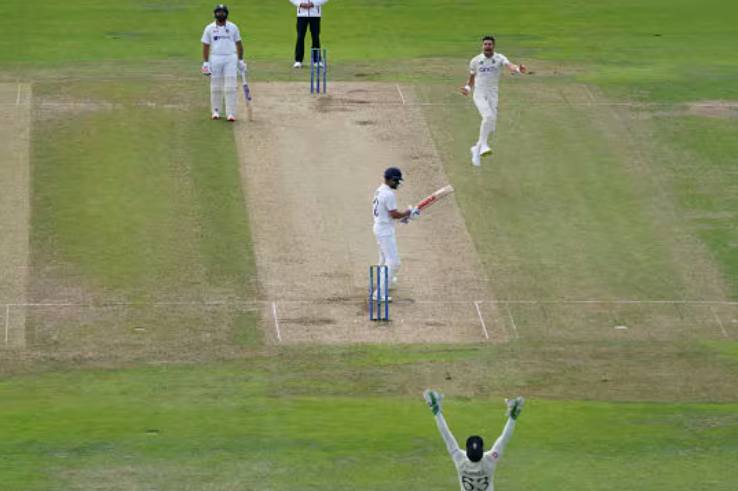
The 2014 Test series was particularly unforgiving. Kohli struggled immensely against the swinging ball, managing to score only 134 runs across 10 innings. He was repeatedly tested outside the off-stump by England’s disciplined bowling attack, most notably the legendary James Anderson. The failure was consistent, and the mental burden grew with every dismissal.
However, what followed was a testament to the mindset that allowed him to eventually become one of the greatest of all time. In a desperate attempt to break the cycle of fear, Kohli decided to change his approach. “I promised myself to smash every ball for a six,” he recalled. The result? He hit the very first ball straight to mid-off for a duck. While the scorecard showed a failure, Kohli revealed that the act itself provided a profound sense of relief. It was not about the runs; it was about reclaiming his agency and refusing to play with fear.
Lessons in Resilience
This episode serves as a powerful reminder of the hidden pressures that elite athletes navigate daily. Fans often judge players solely on the basis of statistics, highlights, and trophy cabinets, often overlooking the emotional toll of professional sports. Kohli’s transparency about his struggles highlights several key aspects of professional resilience:
- Acknowledging the Struggle: Realizing that mental fatigue is a natural part of a high-stakes career.
- The Cost of Perfection: How the pressure to constantly perform can lead to cycles of negative reinforcement.
- Breaking the Cycle: Sometimes, the path to recovery involves letting go of the fear of failure, even if it leads to an immediate setback.
From Vulnerability to Mastery
The 2014 tour did not define Kohli’s career; instead, it served as the crucible in which he forged a stronger, more resilient version of himself. He did not retreat from the challenge. He learned from it, adapted his technique, and underwent a rigorous process of self-improvement. By the time India returned to England in 2018, the narrative had shifted entirely. Kohli arrived as a refined batter, unfazed by the conditions that had haunted him four years prior, and emerged as the standout performer of that series.
Kohli’s story is not just about cricket; it is a human narrative about the courage required to face one’s darkest moments, the willingness to be vulnerable, and the eventual triumph that comes from persevering through the storm. It proves that greatness is not the absence of failure, but the determination to keep walking despite the fear of it.