Was Nitish Rana Out or Not Out vs CSK? Controversial Dismissal Explained

Was Nitish Rana Out or Not Out vs CSK? The Controversial Dismissal Explained
During the high-stakes Delhi Capitals vs Chennai Super Kings clash on May 6, a rare and perplexing incident unfolded at the Arun Jaitley Stadium that sparked debate across cricketing circles. Nitish Rana appeared to be involved in a potential ‘double dismissal’ scenario, but the umpires’ verdict hinged on a fine interpretation of the rules. So, was he out or not? Let’s break it down.
What Happened During the Controversial Moment?
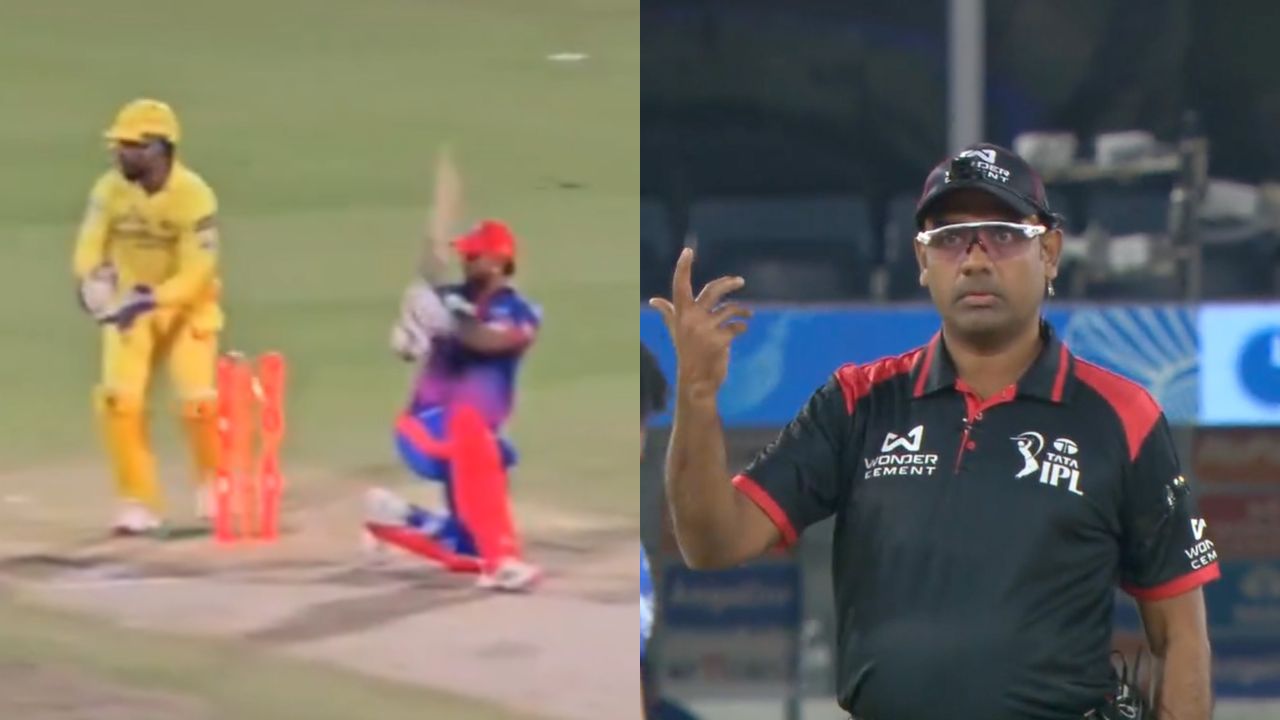
In the 10th over of Delhi’s innings, with the score at 61/4, Rana faced a delivery from Noor Ahmad. Attempting a sweep shot, he lofted the ball high toward the boundary, where a CSK fielder waited to take the catch.
But just before the catch was completed, something unusual happened: the bails flew off the stumps without any physical contact from the bowler or wicketkeeper Sanju Samson. Replays confirmed the culprit—strong gusts of wind sweeping across the pitch.
The Zing wicket system lit up, adding to the confusion as fans and players alike wondered: had Rana been dismissed twice—once by catch, once by hit wicket?
So, Was Nitish Rana Out?
Yes, he was out—and the dismissal stood as a catch.
Despite the bails dislodging mid-air, Rana was not ruled out hit wicket. The reason? According to the MCC Laws of Cricket and ICC playing conditions, a wicket is only considered broken if the bails are dislodged by the ball, a player, or the bat. External factors like wind do not count.
What Does the Rule Say?
- Law 8.5 (MCC): The wicket is deemed broken when at least one bail is completely removed from the top of the stumps by the ball, the striker’s bat or person, or by the action of a fielder.
- External interference, such as wind or rain, does not constitute a broken wicket.
- Under extreme weather, umpires can even choose to continue play without bails if conditions persist.
In this case, since the wind caused the bails to fall and not Rana himself, he was not out hit wicket. The ball remained in play, the catch was completed, and the dismissal was valid as a catch.
Why Didn’t the Umpires Stop Play?
While the high winds had already interrupted play earlier, the on-field officials chose to continue with the bails. No request was made to remove them, and under the rules, that’s not mandatory unless both umpires agree.
The decision highlights how natural conditions can influence gameplay, but the laws ensure fairness even in unpredictable moments.
Delhi Capitals Collapse After Rana’s Exit
Rana’s controversial dismissal triggered a deeper slide for Delhi. Captain Axar Patel fell for just 2, leaving the team at 69/5. Only a gritty 38 from Tristan Stubbs and an unbeaten 40 by Sameer Rizvi prevented a complete collapse, helping DC post 155/8.
CSK Chase Down Target With Ease
Chasing 156, Sanju Samson anchored the innings with an unbeaten 87, supported by Kartik Sharma’s brisk 41 off 31 balls. CSK reached the target in just 17.3 overs, securing two crucial points and boosting their net run rate.
The win solidified their position in the sixth spot on the IPL points table, keeping their playoff hopes alive.
Final Verdict: Law Over Luck
Nitish Rana’s dismissal wasn’t a glitch in the system—it was a textbook application of cricket’s rules under unusual conditions. While the wind may have played a part, the law was clear: no player contact, no hit wicket. The catch stood, and the game moved on.
Cricket, as always, proved that sometimes the most confusing moments are the ones that best highlight the beauty of its regulations.