Contents
The New Reality: Why High Scores Rule the IPL
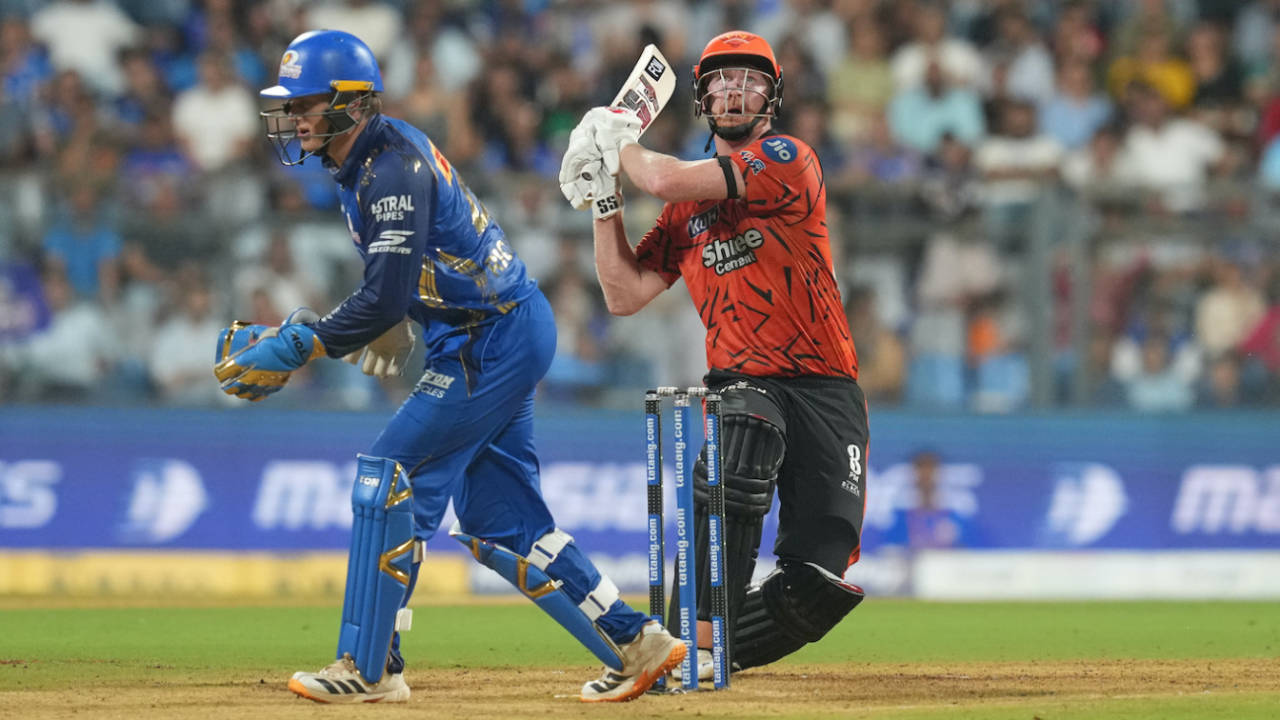
The landscape of modern T20 cricket has shifted so dramatically that even a target of 244 no longer feels safe. During the 2026 season of the Indian Premier League (IPL), batting records have been tumbling with alarming regularity. In a recent clash where Sunrisers Hyderabad (SRH) made light work of a 244-run chase against Mumbai Indians (MI), the conversation shifted from individual brilliance to the existential crisis facing bowlers. According to SRH spin-bowling coach Muthiah Muralidaran, the era of the ‘fair contest’ between bat and ball might be over—and for the sake of the tournament’s survival, it might have to stay that way.
“It’s very difficult for a bowler because these days, every team has an opening pair that doesn’t care about in or out; they just go after the bowling,” Muralidaran remarked during a post-match press conference. He highlighted the statistical evolution of the game, noting that while 40 to 50 runs was considered a solid Powerplay score during his playing days, the modern average has skyrocketed to 70 or 80 runs within the first six overs.
The Fearless Generation: Hitting the Unhittable
One of the most striking aspects of the current IPL season is the complete lack of fear displayed by uncapped youngsters when facing world-class bowling. Muralidaran pointed to 23-year-old Salil Arora, who famously struck a no-look six off Jasprit Bumrah. This moment served as a microcosm for the modern mindset.
The Mindset Shift
“Even a good bowler goes for a six; even Bumrah goes for one or two balls,” Muralidaran explained. “When a new boy like Salil hits a six, it’s unbelievable. You don’t think a young boy will hit a six off someone of Bumrah’s calibre because normally they would think about survival. But nowadays, the approach is different. It’s about how am I going to hit a six.”
This surge in confidence is not accidental. Muralidaran believes that the success of modern power-hitters has created a blueprint for youngsters to follow. The result is a game where bowlers must accept that they will get hit and focus entirely on damage control and accuracy rather than traditional dominance.
The Technical Crisis in Spin Bowling
As one of the greatest spinners to ever grace the game, Muralidaran expressed specific concern regarding the development of slow bowlers. He noted a worrying trend where young spinners are prioritizing pace over turn, essentially turning themselves into ‘throwdown’ bowlers for the opposition.
- Muscle Memory: Muralidaran argues that the ability to spin the ball must be developed at ages 10, 11, and 12.
- Pace vs. Turn: Modern youngsters often bowl quicker to avoid being hit, but without turn, they become predictable.
- The Grassroots Gap: If a player reaches the Under-19 level without learning to turn the ball, their muscle memory is often too fixed to change.
“If you spin, the batters’ eyes open and they realize they might miss it. They have to think about which way it’s going to go. But if you don’t spin, you see in training how batters face throwdowns and hit sixes—it looks like a throwdown bowler is bowling at you, and batters just get into the line and hit,” he warned.
Would Murali and Warne Survive Today?
When asked the inevitable question of how he or the late Shane Warne would have fared on today’s flat, batter-friendly tracks, Muralidaran was characteristically humble. While he believes their ability to turn the ball would have earned them a few wickets, they would not have been immune to the carnage.
“We would have turned the ball, but we would not have made a big dent. Maybe they would have scored 40 runs easily because the wickets are so good. Nowadays, conceding 50 runs is a great deal for a spinner; 40 runs means you’ve bowled well. The game has changed, and we can’t compare the eras,” he admitted. During his career of 170 T20 games, Muralidaran recalled only being hammered for over 40 runs a handful of times—a stark contrast to today’s reality.
The Business of Entertainment
Perhaps the most provocative part of Muralidaran’s assessment was his take on the commercial requirements of the IPL. He argued that the tournament is built on entertainment, and entertainment in the eyes of the masses equals boundaries.
“I think if we give fair wickets, the spectators will say it’s become boring because the T20 followers want entertainment. They want to see the fours and sixes. That’s why the tournament is built like that—with the Impact Player rule and short boundaries. It is a big business at the moment, with sponsors and everything. You will lose the sponsors and the interest of the people if you change it.”
Adapting to the Future
Despite the grim outlook for bowlers, Muralidaran remains optimistic about the resilience of cricketers. He noted that while SRH pioneered this ultra-aggressive power-hitting style, other teams are already adapting. He believes the next phase of the game will see bowlers returning to the drawing board to find new ways to contain totals.
“This will continue, but over a period, bowlers will try to adapt. They will come up with something, and the batsmen will find something else. This is the way modern cricketers are going,” he concluded. For now, the IPL remains a batter’s paradise, where the roar of the crowd is fueled by the sound of the ball disappearing into the stands.