‘Ultimately, it’s 31’ – Labuschagne’s Test career back on the edge: Australia Coach Demands Big Runs

The Australian cricket landscape is abuzz with speculation and concern following a humbling Test defeat to Bangladesh in Darwin. At the heart of the discussion lies the form of star batter Marnus Labuschagne, whose position in the team is now under intense scrutiny. Coach Andrew McDonald has explicitly stated that Labuschagne “needs some big runs,” a sentiment that encapsulates the mounting pressure on selectors ahead of the second Test in Mackay. The stark reality that ‘Ultimately, it’s 31’ – Labuschagne’s Test career back on the edge has become undeniable, prompting a critical look at his recent performances and the potential ramifications for the Australian batting lineup.
Contents
Labuschagne’s Prolonged Century Drought and Mounting Pressure
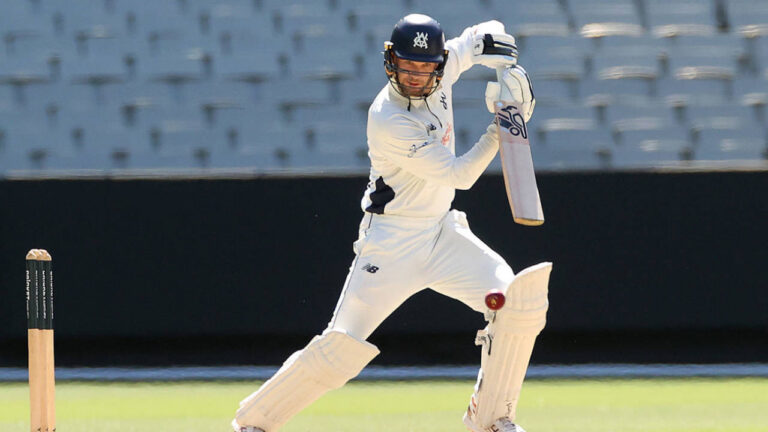
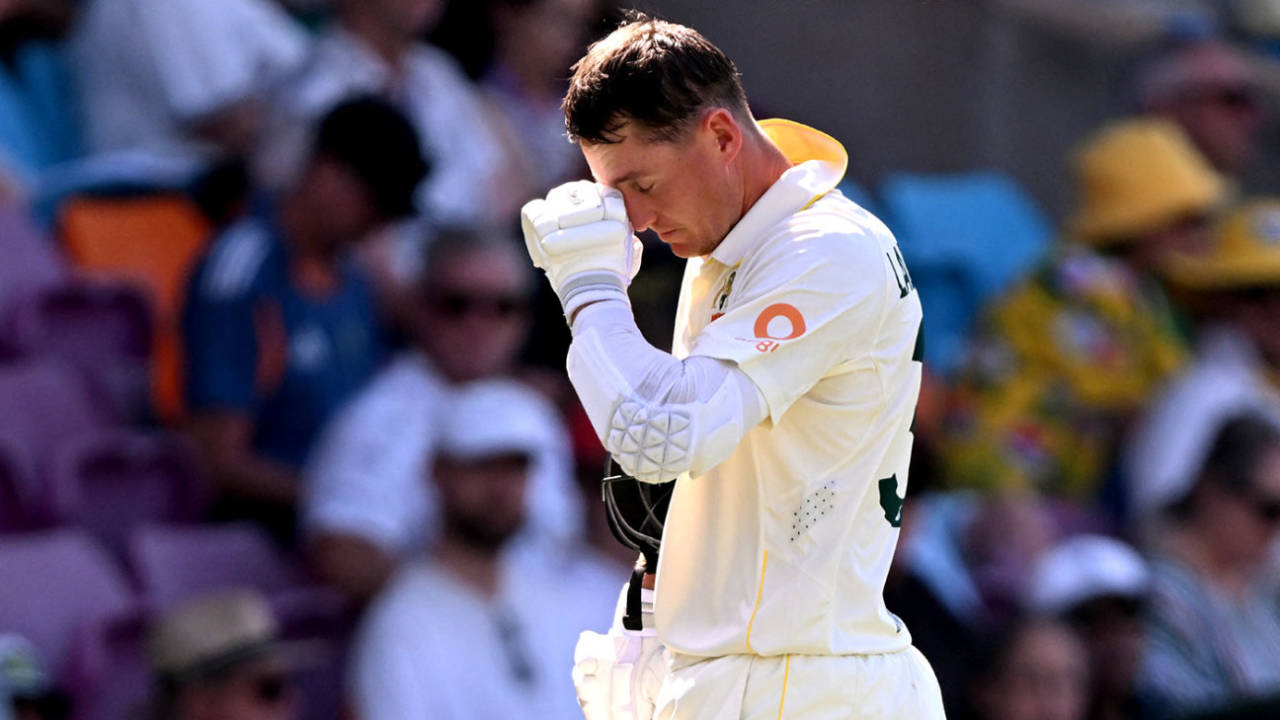
Marnus Labuschagne finds himself in an unenviable position, extending his Test century drought to a staggering 42 innings. His last triple-figure score dates back to July 2023. Since then, his average has plummeted to 25.32, with only nine half-centuries to his name. The recent match in Darwin saw him contribute scores of just 1 and 31, doing little to alleviate the concerns surrounding his form. This dip in performance is particularly alarming given his previous stature as a prolific run-scorer for Australia.
It’s not the first time Labuschagne has faced such a challenge. Last year, he was temporarily dropped from the Test side against the West Indies, with selectors urging him to refine his technique and rediscover his scoring touch. He responded emphatically, smashing five domestic centuries in nine innings for Queensland across Sheffield Shield and One-Day cricket at the start of the last Australian summer. This exceptional run of form earned him a recall for the Ashes series. However, after a promising start that included two half-centuries, his form has once again tapered off, yielding a mere 166 runs at an average of 18.44 in his last nine Test innings. While he has managed to reach 30 in three of his last four outings, the crucial conversion into a substantial score, let alone a century, has eluded him.
Coach McDonald’s Frank Assessment: “Ultimately, It’s 31”
Coach Andrew McDonald did not mince words when discussing Labuschagne’s situation, emphasizing that runs are the fundamental requirement, regardless of any technical adjustments. “We want runs is the bottom line,” McDonald asserted. “I think it was 31 he got in the second innings, and up until the point he got out, you’d sit there and say he was looking good. He was moving well, he’s clipping off his pads, he was getting back through the ball down the ground. So it’s easy for me to sit here and try to defend that, but ultimately it’s 31. It’s not a big score. He’s lacked runs. He feels that. We feel that. We’re working incredibly hard as a coaching group.”
McDonald further elaborated on the coaching staff’s efforts to help Labuschagne. “It’s one thing to talk about the player. You’ve got to talk coaching. We’ve got to get the best out of Marn as well. And we’re working through that. I think we saw some change in the way that he played, so that’s good. So some of that work that he had done feels as though it’s stuck under pressure, and that’s always a hard part too. You can try to make these changes, and then when you get put under extreme pressure in the middle, sometimes those changes don’t hold. So it was good to see them hold up. But it is 31. He’s disappointed of that missed opportunity. He needs some big runs.” This detailed insight highlights the internal struggle and the high expectations placed on a player of Labuschagne’s calibre.
The Gravity of a Second Omission
The decision facing the selectors regarding Labuschagne carries significant weight, perhaps more so than for other players. There is a strong sentiment within cricket circles that if Labuschagne, at 32 years of age and with 64 Tests under his belt, were to be dropped for a second time within a year, it would be exceptionally difficult for him to make a return to Test cricket. This consideration adds an extra layer of complexity to an already challenging selection conundrum.
Furthermore, with uncertainties surrounding the longevity of Steven Smith’s Test career, there has been a considerable desire for Labuschagne to regain his form and cement his place at No. 3. This would ensure a seasoned batter is firmly established in a crucial position for when Smith eventually steps away from the Test arena. The urgency for Labuschagne to perform also extends to his One-Day International (ODI) place, especially after Smith’s recent retirement from that format, underlining his importance across formats for Australian cricket planning.
Despite his struggles, selectors recently opted to stick with Labuschagne in ODIs against Bangladesh, sliding him to No. 7 in the lineup rather than dropping him entirely. This decision reflected the view that he remains a key component of their strategy for the upcoming ODI World Cup in South Africa next year. However, McDonald is acutely aware of the external pressure to implement changes, particularly after a Test loss. “The easy option is to call for change,” McDonald admitted. “A lot of people call for change even when we’re winning, so they’re entitled to do that as well on the back of a performance like that. Why wouldn’t they? That’s part of our lot. You lose the game. There’s going to be calls on some guys who aren’t performing to the levels that they would like or we would like.”
Jake Weatherald Also Under the Microscope
Marnus Labuschagne is not the only batter facing intense scrutiny. Jake Weatherald, who scored 23 and 0 in Darwin, also finds himself under pressure. With an average of 20.36 after 12 Test innings, his performances have left much to be desired. Following the Ashes, Weatherald made significant adjustments to his setup to counter his vulnerability to getting trapped lbw. However, these changes appear to have inadvertently affected his decision-making outside the off stump, leading to dismissals through nicks behind and chopping on – occurrences rarely seen from him previously in Test cricket.
McDonald addressed Weatherald’s situation, stating, “There was some change to Jake in terms of where he lined up and his movement patterns. It’s always hard to critique small sample sizes as to whether it holds up. [He] dragged one on, drove at one in the first innings and was dismissed. It’s probably harder with that smaller sample size to say, yep, that’s going to hold up under pressure.” This indicates the challenges in evaluating recent technical changes over a limited number of innings.
The Dilemma of Replacements and Future Planning
Should the Australian selectors decide to make changes to the batting lineup, identifying suitable replacements presents an equally formidable challenge. The timing of the current Test series means that there is no ongoing domestic cricket, limiting the opportunities for players to stake a claim. Within the 13-man squad, Josh Inglis is the only spare batter, but his top-three experience in first-class cricket is minimal, having batted there only six times. Matt Renshaw and Cooper Connolly were part of an extended training squad in Brisbane leading up to the series, indicating they are in the selectors’ thoughts.
Of the potential candidates, 30-year-old Matt Renshaw appears to be the best-suited for a top-order role. He enjoyed an exceptional Sheffield Shield season, scoring three centuries in 10 innings and averaging a comfortable 49.90, the highest among the top 25 run-scorers. Furthermore, his impressive start to his international white-ball career has caught the selectors’ attention. Renshaw also boasts a strong record at Mackay, the venue for the second Test, where he has scored 170 and 135 in two of his three Shield innings, making a compelling case for his inclusion.
Calls for injecting youth into the Australian lineup are always present, but the immediate options from domestic performers are somewhat limited. Cooper Connolly, at 22, recently scored an ODI century against Bangladesh as an opener two months ago. However, he has only batted in the top three once in first-class cricket and is yet to register a first-class century. Other young talents like Sam Konstas and Campbell Kellaway, who missed out in the CA XI game, are working diligently on their games during the pre-season. It is widely anticipated that both will be earmarked for an Australia A tour to India in September, suggesting they are not immediate contenders for Test selection.
McDonald acknowledged the ongoing conversation about the team’s age profile and the natural calls for change that arise after a loss. “It’s always going to be a conversation,” he stated. “The age profile of the team, where we’re at, how we’re traveling, a loss doesn’t help that. There’s no doubt about that. These players have got a fair bit of cricket left in them, I believe. And it’s just how we navigate through it.”
He emphasized the emotional impact of a Test defeat on the players. “There’s always going to be calls for change on the back of a loss. There’s going to be an emotion around that from the outside and even internally. Our guys sit in that change room at the moment, and they’re feeling it. You feel a Test loss. It means a lot to them to play for Australia. So let’s not lose that in all this as well.”
Ultimately, the focus remains on progression. McDonald concluded by stating, “It’s how you move forward, and ultimately, our next decision is going to be our most important.” As selectors convene, the future of key players like Marnus Labuschagne and Jake Weatherald, and indeed the composition of Australia’s Test batting order, hangs in the balance, awaiting a decision that will undoubtedly shape the team’s trajectory in the coming season.