Knight: ‘Wanted to give my all this summer but right time to step away’

Contents
An End of an Era for England Cricket
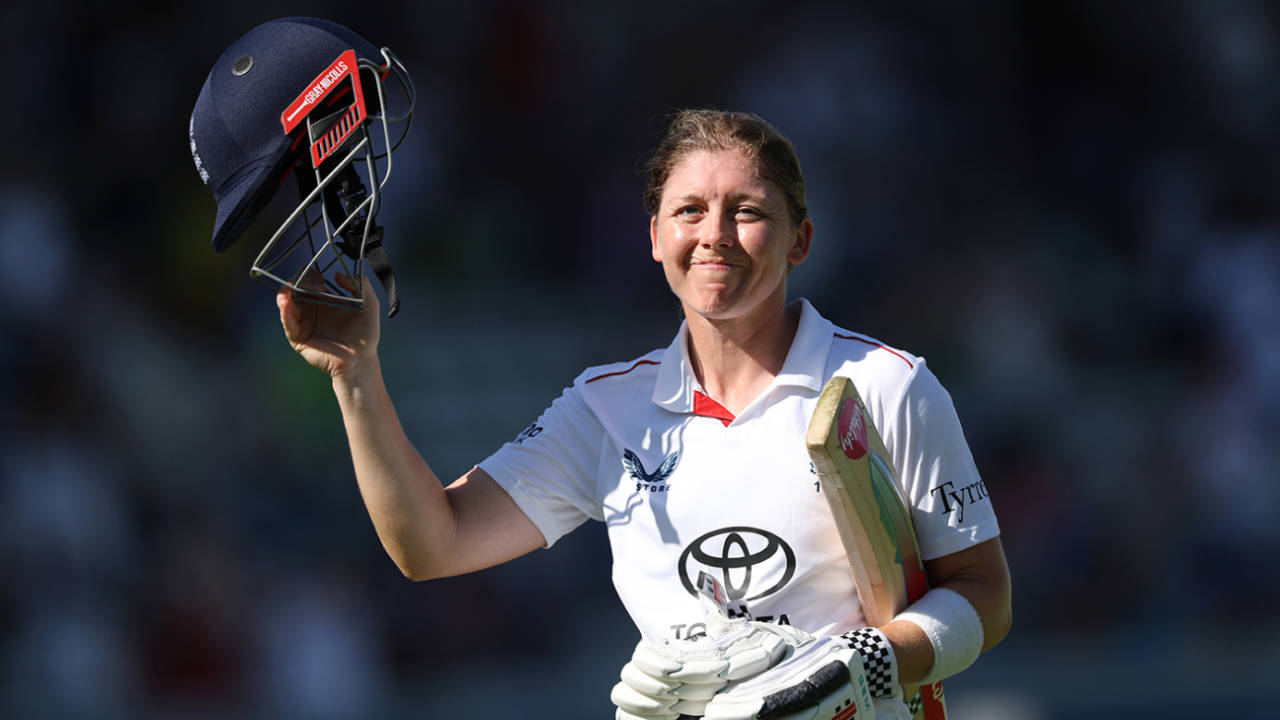
As England walked off the field following their recent Test match against India at Lord’s, a poignant chapter in women’s cricket history came to a close. Heather Knight, a stalwart of the English game, turned to her successor, Nat Sciver-Brunt, to request a final moment with her teammates. This was the setting for the difficult announcement that, after 16 incredible years, she was stepping away from international cricket.
Reflecting on the moment, Knight admitted that delivering the news was the hardest part of the entire process. ‘The people have always been the most important thing for me,’ she shared. ‘The thing I love about cricket is the different characters, the different people. I was glad when it was out; I was worried about getting emotional, but it was nice to see everyone’s reaction and just spend some time with the people I’ve shared the dressing room with for so long.’
A Legacy Built on Partnerships
Nat Sciver-Brunt, who sat alongside Knight following the match, spoke of the privilege of sharing the field with her for so many years. ‘I had big boots to fill when I took over the captaincy, but Heather and I have enjoyed many batting partnerships,’ Sciver-Brunt noted. Their chemistry on the pitch was legendary, perhaps best exemplified by their 133-run stand during the T20 World Cup semi-final against South Africa just 11 days prior to her retirement announcement.
Planning for the Future
The decision to retire was not a sudden impulse but a carefully considered transition. Knight had already prepared for life after playing by accepting the role of general manager for London Spirit in The Hundred. The decision to step away during the most pivotal summer of women’s cricket in England—featuring a home T20 World Cup and the historic first-ever women’s Test at Lord’s—was a calculated move.
‘I probably knew at the start of this year that I was thinking this might be the case,’ Knight explained. ‘I knew that I wanted to give my all this summer, and then that was probably the right time to step away. I’m really excited for what’s next. It’s something I’ve been thinking about for the last couple of years.’
Challenging the Narrative on Age
For much of her 30s, Knight faced repetitive questions about retirement, a phenomenon that unfortunately remains more prevalent in the women’s game than the men’s. However, Knight departs on her own terms, proving that age is merely a number. With players like Harmanpreet Kaur and Danni Wyatt-Hodge continuing to perform at elite levels well into their 30s, Knight leaves behind a blueprint for longevity and professionalism.
Looking Ahead: Domestic Red-Ball Cricket
Despite the disappointment of a heavy defeat at Lord’s, Knight used her final platform to advocate for the growth of the sport. She remains a firm believer in the value of domestic red-ball cricket to develop well-rounded players. ‘When I was a kid, it was hammered into me to value your wicket,’ she said. ‘A lot of our younger cricketers coming through are a lot better at T20 than they are 50-over, and they have to learn that side of it—being able to build an innings or shape a spell.’
As England looks toward future Ashes series and beyond, the influence of Knight’s mentorship remains clear. Players like Sophie Ecclestone, who earned her first international half-century during this Test, credit Knight with shaping their careers. As the game moves forward, the legacy of Heather Knight will undoubtedly remain a cornerstone of English cricket, serving as an inspiration for the generations waiting in the wings to carry the torch forward.