Contents
A Lost Year for English Cricket
The England and Wales Cricket Board (ECB) confirmed on Thursday morning a truth that had become painfully apparent to observers and fans alike months ago: England’s 2026 Test summer has been a complete write-off. While the arrival of a tactical mind like Stephen Fleming provides a glimmer of hope for the future, the timing suggests a regime that has spent the last year treading water rather than building a legacy.
The Cost of Inaction
It was clear by mid-December that the status quo was crumbling. England had fallen 3-0 behind in what Brendon McCullum had famously labeled the biggest series of their lives, and the internal faith in the ‘Bazball’ message was visibly fraying. Despite this, a full year will have passed between that crisis and the moment Fleming takes charge of his first Test. In the interim, England has endured a futile home season defined by indecision.
Richard Gould, the ECB’s chief executive, had promised a thorough review following the 4-1 series loss in Australia. Yet, the outcome of that review was a commitment to maintaining the status quo, with leadership insisting that the management team could ‘adapt and evolve.’ This refusal to act decisively after the T20 World Cup missed a critical window of opportunity to install a new permanent head coach, leaving the side to drift through a series of stop-gap arrangements.
The Stokes Departure and Leadership Vacuum
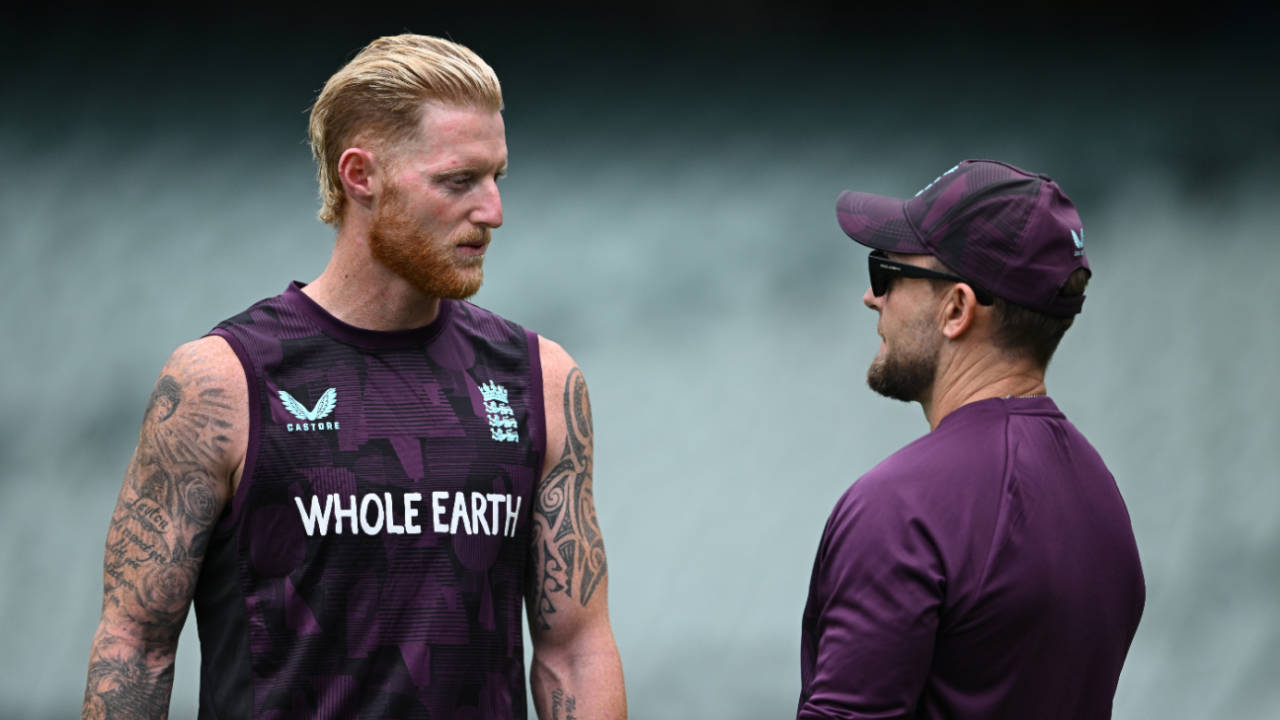
The failure to pivot earlier had tangible consequences on the pitch, most notably regarding Ben Stokes. Had the ECB acted with urgency, a new coaching regime might have re-energized the captain and prevented the burnout he explicitly described during the Trent Bridge Test. Instead, by sticking with a sinking ship, England lost the services of their talismanic leader. Stokes’ subsequent spiral—marked by off-field controversy and a premature exit—stands as a stark symbol of a team lacking clear, consistent direction.
Furthermore, the current state of the captaincy reveals a worrying lack of succession planning. That Joe Root has been drafted back into the leadership conversation, four years after he initially resigned, is a damning indictment of the talent pipeline. Harry Brook, officially the vice-captain, finds himself in an awkward purgatory, begging the question: how has the ECB allowed the cupboard of leadership candidates to become so bare?
The Road Ahead Under Fleming
Stephen Fleming certainly possesses the pedigree to turn things around. His success in the IPL and his tactical acumen are well-documented. However, he inherits a squad that is mentally exhausted and tactically unbalanced, highlighted by the recent failure to include a frontline spinner in crucial matches. Rob Key, the Managing Director, continues to defend his position despite the mounting evidence of poor strategic choices. While Key may have secured Fleming’s signature, the fact that he was not the first choice—following Andy Flower’s rejection of the role—further emphasizes the lack of a cohesive, long-term vision.
Fleming will not even be present for the upcoming series against Pakistan, which will instead be overseen by Marcus Trescothick in an interim capacity. This continuation of temporary solutions only delays the inevitable rebuilding process. When Fleming finally takes the reins for the tour of South Africa, he will face the reigning World Test Champions with very little runway to implement his philosophy before the eyes of the cricketing world turn toward the 2027 Ashes.
Conclusion
The ECB may argue that stability is the right path, but the evidence suggests that stability has merely become a mask for stagnation. While there is still hope that England can find a balance in the absence of Stokes, the reality remains that the last 18 months have been a missed opportunity for evolution. As Rob Key prepares to face the media to justify this period of chaos, the English cricketing public is left to wonder if the long-term future is any more secure than the wasted summer that preceded it.