Bangladesh Regret Missed 500-Run Target in Mirpur Test Against Pakistan

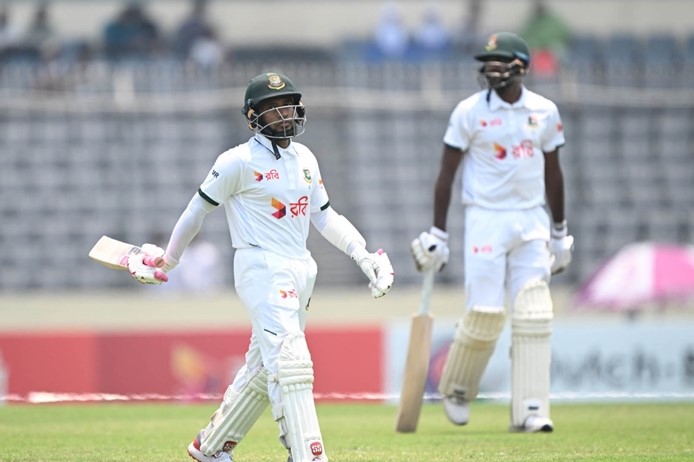
Bangladesh entered the second day of the Dhaka Test with a clear mission: push past 500 runs and seize firm control of the match. Though they finished with a respectable 413 in their first innings, the mood within the camp was one of quiet regret — not because the total was poor, but because they believed more was possible.
Contents
Target Was 500, Not 450
Earlier, captain Mominul Haque had mentioned a 400–450-run target, but behind the scenes, the team leadership had set its sights higher. Speaking after Day 2, senior assistant coach Mohammad Salahuddin revealed that the real ambition was to break the 500-run barrier.
This aggressive mindset influenced on-field decisions, including Mehidy Hasan Miraz’s ill-fated strokeplay. Miraz, known more for his grit than flamboyance, played a rare attacking shot that led to his dismissal.
“Our target was to get to 500 runs. Maybe that is why he tried that shot. Sometimes you can get out like that while trying to push the score. There is nothing to be too disappointed about,”
Said Salahuddin, defending the intent despite the outcome. The comment underscores a subtle shift in Bangladesh’s Test philosophy — a move toward assertiveness, even if it comes with risk.
Abbas Strikes, Wicket Column Crumbles
The momentum stalled largely due to Mohammad Abbas, whose precision with the ball dismantled Bangladesh’s middle and lower order. The Pakistan pacer finished with a five-wicket haul, exploiting consistent line and length on a pitch offering subtle movement.
Salehuddin had nothing but praise for Abbas’s craft:
“He does not miss his area. He can bowl in the same spot over and over again, and that is his biggest strength. He has done this before as well. Since there was a bit of movement on this wicket, he used the conditions really well.”
Abbas’s ability to build pressure and strike at key moments prevented any late-innings surge, exposing the fragility of a batting lineup that lost wickets in clusters.
Missed Opportunities in the Middle Order
Salahuddin acknowledged Bangladesh had handled Abbas better on the first day, but emphasized that the challenge intensified as the batting order thinned.
With Litton Das and veteran Mushfiqur Rahim falling before anchoring a stabilizing stand, the opportunity for a game-changing partnership slipped away.
“We managed him well yesterday. But today we had fewer batters left. If Litton Das and Mushfiqur Rahim could have stayed a little longer, things might have been different.”
The absence of a substantial partnership on Day 2 was, in Salahuddin’s view, the real missed chance.
Small Gains, Big Implications
While 413 is a competitive total, especially on a responsive pitch, the coaching staff believes an extra 50 runs could have shifted the psychological edge.
“One more strong partnership would have helped us a lot. At the end of the day, we still crossed 400 runs, which is good. But I think another 50 runs would have put us in a much stronger position.”
The statement reflects a maturing mindset — one that no longer settles for respectability but hungers for dominance.
Looking Ahead
As the match progresses, Bangladesh will look to their bowlers to capitalize on a pitch that continues to assist seamers and spinners alike. But the lingering thought remains: with a bit more patience and one unbroken partnership, they might have dictated terms far more firmly.
In Test cricket, small margins often define big outcomes. And in Mirpur, Bangladesh are left wondering what could have been — not with bitterness, but with the quiet resolve of a team learning to aim higher.