Babar Azam’s Controversial Century: PSL 2026 Umpiring Blunder Analysis

Contents
A Lifeline That Changed the Game: The Babar Azam Controversy
In the high-pressure environment of T20 cricket, the margin between a match-winning performance and a premature exit often comes down to a fraction of a second or a single pixel on a screen. This was vividly illustrated during the PSL 2026 Qualifier clash between Peshawar Zalmi and Islamabad United on April 28. While the headlines will focus on Babar Azam’s magnificent century, the narrative is inextricably linked to a pivotal umpiring decision that has sparked intense debate among fans and analysts alike.
Umpiring blunders, unfortunately, have become an increasingly common talking point in the modern game. Despite the integration of state-of-the-art technology, the ongoing seasons of both the IPL 2026 and the Pakistan Super League 2026 have seen several instances where the Decision Review System (DRS) failed to provide the absolute clarity it promises. The incident involving Babar Azam is a textbook example of how a technicality can alter the course of a playoff match.
The Moment of Dispute: Shadab Khan vs Babar Azam
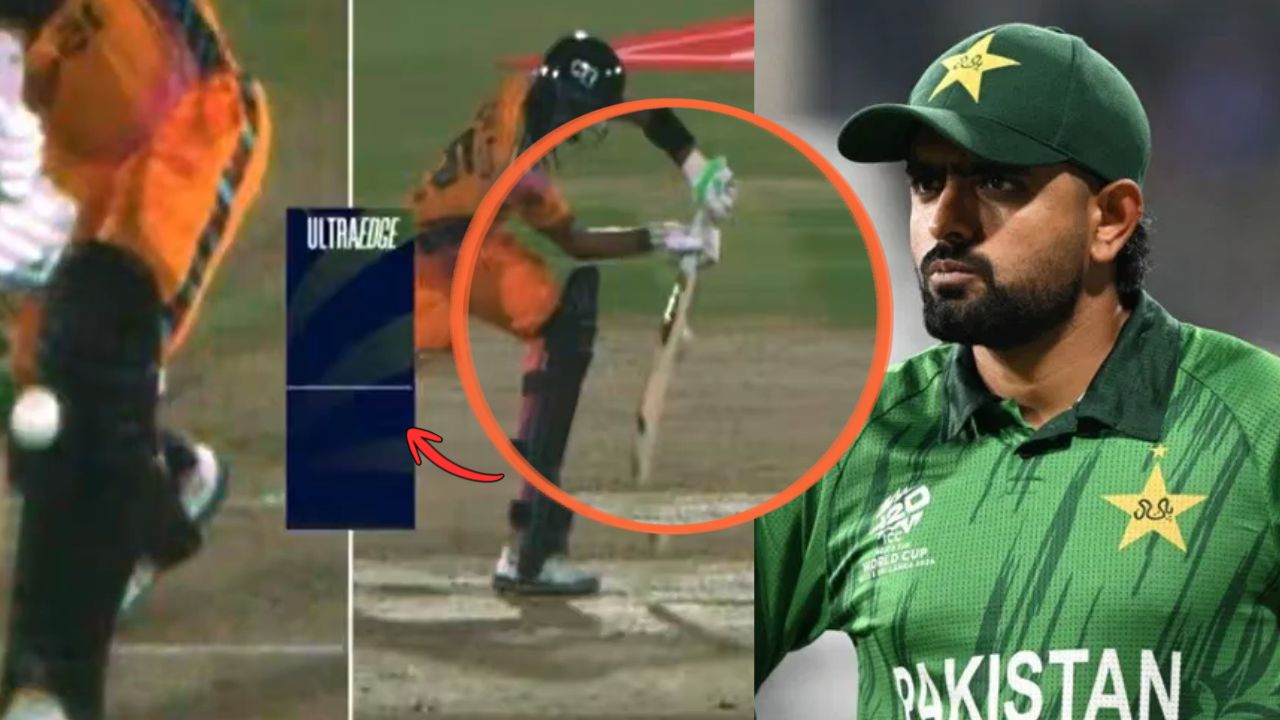
The drama unfolded during the penultimate ball of the ninth over. Islamabad United’s Shadab Khan, known for his cunning variations, delivered a googly that landed full and around middle stump. Babar Azam, leaning forward to flick the ball across the line, failed to make meaningful contact, and the ball crashed squarely into his pads.
The appeal from the Islamabad United camp was instantaneous and thunderous. On the field, it appeared to be a clear-cut LBW dismissal. However, the third umpire, while reviewing the UltraEdge, spotted a very thin spike at the moment of impact. While the spike was almost negligible, the umpire ruled that the ball had made an inside edge before striking the pads, granting Babar Azam a lifeline that would prove catastrophic for the opposition.
Cricket experts have frequently pointed out that such minute spikes on UltraEdge are not always indicative of a bat-ball collision. Often, these noise anomalies are caused by the sound of air as the bat is whipped through the air or even by jewelry and ornaments worn by the batter. In this instance, the decision to favor the batter despite the negligible evidence has left the Islamabad United camp feeling aggrieved.
From Lifeline to Legacy: A Record-Breaking Century
At the time of the reprieve, Babar Azam was sitting on 43 off 29 deliveries. Had he been dismissed, the momentum would have shifted decisively toward Islamabad United. Instead, Babar capitalized on the second chance with clinical precision. He reached his half-century in the 12th over, completing the milestone in just 38 balls.
Babar didn’t stop there. He proceeded to dismantle the Islamabad bowling attack, producing a breathtaking display of power and poise to finish with a heroic 103 off 59 deliveries. This innings was not just about the match result; it was about history. With this performance, Babar Azam has now scored the most centuries by any batter in the history of the PSL tournament.
The PSL Century Leaderboard:
- Babar Azam: 4 Centuries
- Usman Khan: 4 Centuries
- Fakhar Zaman: 3 Centuries
Peshawar Zalmi’s Dominance and Islamabad’s Struggle
While Babar’s century was the centerpiece, he wasn’t the only one causing trouble for Islamabad United. The Peshawar Zalmi batting lineup fired on all cylinders, posting a formidable total that left Islamabad chasing a daunting target of 222 runs.
Significant contributions came from Mohammad Haris, who provided explosive momentum with a rapid 35 off just 16 balls, and Kusal Mendis, who added a steady 41 off 26 deliveries. Together, they ensured that the platform laid by Babar was fully utilized.
On the bowling side, Islamabad United struggled to contain the onslaught. Faheem Ashraf proved expensive, leaking 36 runs in his three-over spell while picking up only one wicket. Richard Gleeson fared slightly better in terms of wickets, claiming two, but he was the most expensive bowler of the match, conceding 45 runs across his four overs.
Conclusion: The Cost of a Single Decision
As the dust settles on Qualifier 1, the conversation remains centered on the intersection of technology and human judgment. While Babar Azam’s skill is undeniable, the fact remains that a disputed LBW call gave him the opportunity to shatter records and secure a dominant position for his team. For Islamabad United, it was a costly lesson in the unpredictability of the DRS, leaving them to ponder what might have happened had the third umpire ruled in their favor.