Salman Ali Agha Reveals Biggest Regret Involving Haris Rauf After Asia Cup Final Loss

Contents
Pakistan Cricket‘s Tumultuous Period: A Deep Dive into Recent Struggles
Pakistan cricket finds itself navigating one of its most challenging phases in recent memory. A complex interplay of factors, ranging from persistent political interventions in administrative affairs to a seemingly endless rotation of captains, has created an environment of instability. This internal turmoil has inevitably translated into a series of below-par performances across all formats, particularly in high-stakes international tournaments, leaving fans and pundits alike questioning the team’s trajectory. The once formidable ‘Men in Green’ have struggled to maintain consistency and their competitive edge on the global stage, leading to widespread scrutiny and calls for significant structural reforms.
A Concerning History of Recent Declines
The decline in Pakistan’s cricketing fortunes has been starkly evident since their impressive run to the final of the T20 World Cup in 2022, where Babar Azam led the side with distinction. Following that promising campaign, the team’s performance graph has unfortunately trended downwards. In the subsequent ODI World Cup 2023, Pakistan narrowly missed out on a semi-final spot, a result that, while disappointing, still hinted at moments of competitive spirit. However, the T20 World Cup 2024 proved to be a significantly more embarrassing outing, with an unexpected and decisive loss to the United States of America marking an early exit from the tournament. This trend of underperformance continued into the Champions Trophy 2025, where, despite holding the advantage of being the host nation, the Asian giants failed to progress beyond the league stage, a particularly galling outcome for the home crowd. The challenges persisted through the T20 World Cup 2026, which saw another premature departure for Pakistan, even with the logistical benefit of playing all their matches in a single city, thus minimizing travel and acclimatization issues.
Adding to these woes, the recently concluded Asia Cup, a multinational tournament exclusively featuring Asian teams, presented a similar narrative of struggle for Pakistan. These consecutive disappointments have placed immense pressure on the team and its leadership, sparking extensive debates about the core issues hindering their progress and their ability to perform under pressure in marquee events.
The Persistent Captaincy Conundrum
A significant contributing factor to Pakistan’s current predicament has been the incessant chopping and changing of leadership. Since the T20 World Cup 2022 final, the team has seen no fewer than half a dozen captains across various formats, creating a palpable lack of continuity and long-term vision. Currently, Pakistan operates with three distinct captains for its three formats: Shan Masood in Tests, Shaheen Afridi in ODIs, and, at the time of the Asia Cup discussion, Salman Ali Agha in T20Is. Disturbingly, all three have faced criticism for their underperformance as leaders, failing to inspire a turnaround in the team’s fortunes. This constant rotation at the helm not only disrupts team dynamics but also hinders the development of a stable and confident unit, essential for sustained success at the international level.
Salman Ali Agha’s Critical Regret Involving Haris Rauf in the Asia Cup Final
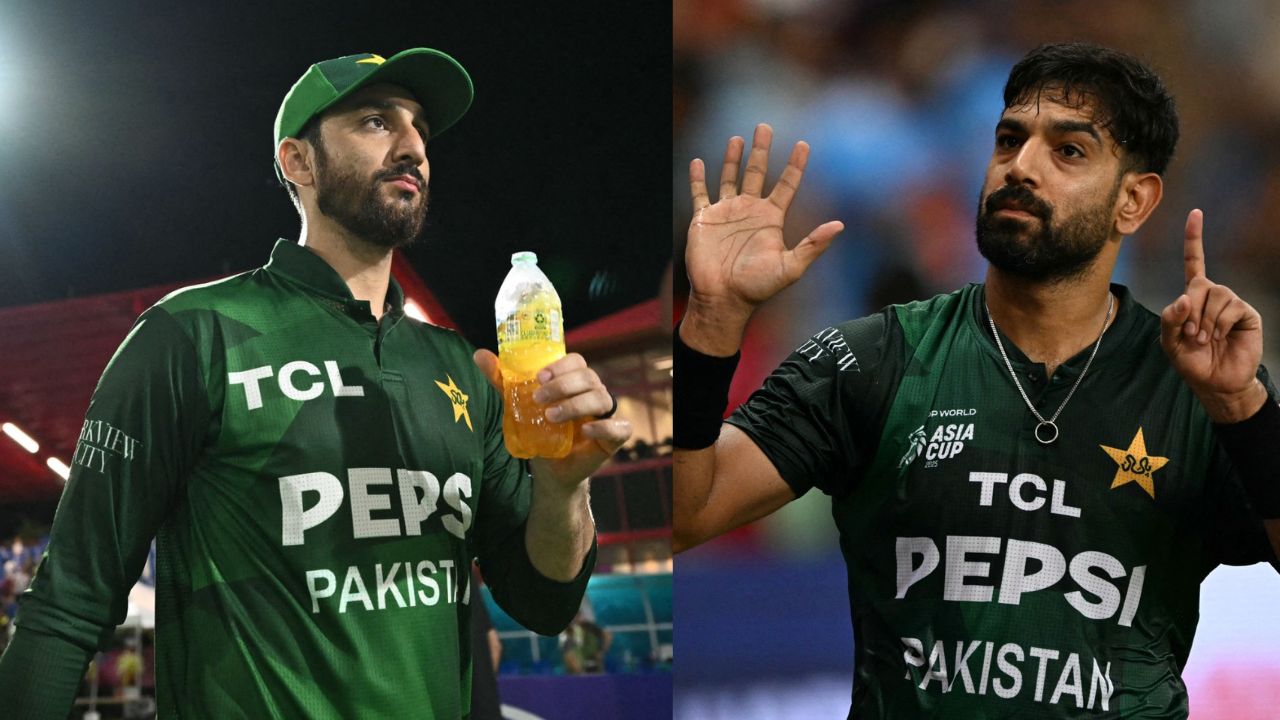
It was amidst this backdrop of national team struggles that the Asia Cup final in late 2025 unfolded, pitting arch-rivals Pakistan against India. As Pakistan ultimately succumbed to India in a fiercely contested final, much of the post-match scrutiny naturally fell upon then-T20I captain Salman Ali Agha. India’s dominance in the tournament was evident, having defeated Pakistan thrice in the marquee event, with the final loss being particularly painful. The decisive moment arrived as Tilak Varma delivered a nail-biting finish for India, securing victory off the bowling of Haris Rauf in Dubai, a memory that continues to haunt Pakistani fans and players alike.
Reflecting on that high-pressure encounter, Salman Ali Agha candidly admitted that a specific bowling decision during the Asia Cup 2025 final stands as his biggest regret. He expressed deep remorse over entrusting the crucial final over to fast bowler Haris Rauf, rather than continuing with the more economical Abrar Ahmed. This strategic choice, made under immense pressure, had significant ramifications for the outcome of the match. It is important to note the contrasting performances of the two bowlers in that game. Abrar Ahmed had completed his quota of overs by the 16th over, returning with highly respectable figures of 1 wicket for 29 runs. In stark contrast, Haris Rauf, who could only complete 3.4 overs before the game’s conclusion, had already leaked a staggering 50 runs at a detrimental economy rate of 13.6 runs per over.
In an interview with ARY Digital, Salman Ali Agha articulated his regret with striking clarity: “I think my biggest regret is giving over to Haris Rauf in Asia Cup Final. If I had continued with Abrar (Ahmed), the result of the game might have been completely different.” This statement underscores the profound impact of split-second decisions in critical cricketing moments and the heavy burden of captaincy. Following a subpar performance in the Pakistan Super League (PSL) 2026, Salman Ali Agha later cited this period of reflection as a reason for taking a break from T20Is, indicating a desire to refocus his efforts on the longer formats of the game, namely One Day Internationals and Tests, suggesting the mental toll such experiences can take on a player.
The Strained Dynamics of India-Pakistan Cricketing Relations
Beyond the internal struggles and tactical regrets, the broader context of India-Pakistan cricketing encounters is intrinsically linked to their complex geopolitical relationship. It is an open secret that the two nations share a strained rapport, extending beyond the cricket field into their respective foreign policies. The Asia Cup 2025, in which Agha’s regret unfolded, was itself hosted against the somber backdrop of the terrorizing Pahalgam attack, an incident that further heightened tensions between the neighboring countries.
The tournament was marred by significant off-field drama, most notably the conspicuous absence of customary pre- or post-match greetings between the two teams. This deliberate avoidance of sportsmanship gestures ignited a global debate about the spirit of cricket and the impact of political relations on sporting contests. During the same candid interview, Salman Ali Agha shed light on this controversial “handshake saga,” stating that he was personally inclined towards extending the traditional courtesies but alleged that the Indian team was “adamant about breaking the code.” This revelation highlights the deep-seated animosity that sometimes overshadows the competitive spirit of the game when these two cricketing giants face off.
The clashes between India and Pakistan share a rich and storied history, characterized by intense rivalry and unforgettable moments. However, this illustrious rivalry has unfortunately been curtailed by political tensions, with the two teams having not played a bilateral series against each other since 2012. This prolonged hiatus deprives cricket fans worldwide of one of the sport’s most electrifying contests, leaving a void that multi-national tournaments like the Asia Cup and World Cups can only partially fill. The hope remains that one day, sporting camaraderie can transcend political boundaries once more, allowing this iconic rivalry to flourish without external impediments.