Analysis: Is Babar Azam a better batter when he’s captain? His Test record as captain spea

Test cricket has long been heralded as the most demanding format of the game, a true test of skill, resilience, and temperament. Every run scored is hard-earned, and every misstep can lead to dire consequences. This inherent difficulty is often amplified exponentially when a player takes on the mantle of captaincy. The common wisdom suggests that the immense pressure, the constant strategic decision-making, and the weight of leading a nation can often detract from a player’s individual performance, particularly their batting. Many legendary batters have witnessed a noticeable dip in their personal statistics after accepting the leadership role, their focus perhaps divided between their own game and the team’s overarching strategy.
Contents
Babar Azam‘s Exceptional Case
However, the career trajectory of Pakistan’s former Test captain, Babar Azam, presents a fascinating counter-narrative. Far from being burdened by the captaincy, Babar appeared to thrive under its immense demands. His numbers as captain tell a distinctly different and compelling story, challenging the widely held belief that leadership invariably compromises a batter’s output.
A Statistical Analysis of His Leadership Tenure
During his tenure as Pakistan’s Test captain, Babar Azam amassed an impressive 1,738 runs across 36 innings at an outstanding average of 51.11. This remarkable run-scoring spree included four centuries, solidifying his status as an elite performer in the longest format of the game, especially when considering the added responsibility of leadership and the often-challenging phases his team navigated. These figures stand in stark contrast to his performance when not leading the side.
Let’s look at the direct comparison:
| Babar Azam (Tests) | Innings | Runs | Average | 100s |
|---|---|---|---|---|
| As Captain | 36 | 1738 | 51.11 | 4 |
| Not as Captain | 79 | 2754 | 38.78 | 5 |
The stark difference in averages is difficult to overlook. While his overall career numbers without the captaincy are still respectable, with 2,754 runs from 79 innings at an average of 38.78, including five centuries, they fall significantly short of the elite standards he established while at the helm. The 12-point difference in averages (51.11 as captain versus 38.78 when not captain) is a substantial margin in Test cricket, underscoring a clear statistical elevation in his batting prowess when burdened with leadership.
Pressure as a Catalyst for Performance
This compelling statistical anomaly prompts a deeper reflection: did captaincy genuinely make Babar Azam a better batter, or did it simply highlight his inherent ability to perform under extreme pressure? While cricket is a sport replete with complexities where simple correlations are rare, Babar’s case strongly suggests that the added responsibility served as a powerful catalyst for his performance. The weight of leading the national team seemed to sharpen his focus, imbuing his innings with a heightened sense of purpose and determination.
Time and again, when Pakistan found themselves in precarious situations, facing daunting totals or collapsing batting lineups, Babar Azam often rose to the occasion. His response was frequently characterized by long, patient, and resolute innings – exactly the kind of gritty displays demanded by the demanding nature of Test cricket. These were not flamboyant, risk-filled knocks, but rather carefully constructed efforts designed to stabilize the innings, absorb pressure, and set a foundation for his team. This ability to deliver when it mattered most, under the intense scrutiny of captaincy, speaks volumes about his character and mental fortitude.
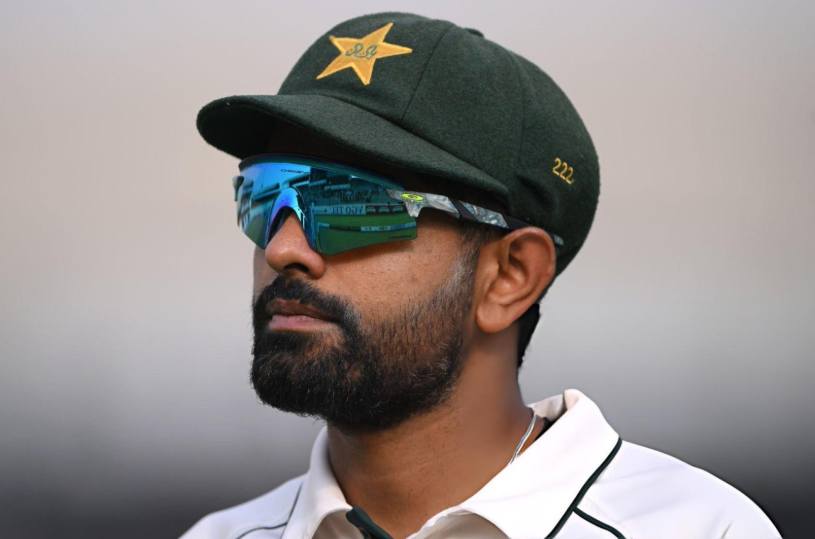
Babar Azam. (Credits: X.com)
Post-Captaincy Performance and Broader Context
Since stepping down from the captaincy, a period marked by renewed focus solely on his batting, his returns have, somewhat surprisingly, not reached the same heights. This post-captaincy phase, while still yielding consistent contributions, has seen his average revert closer to his pre-captaincy numbers rather than sustaining the elevated level observed during his leadership. This observation further fuels the argument that the captaincy somehow unlocked an additional dimension to his batting.
It is, of course, crucial to acknowledge that numbers alone do not encapsulate the entire narrative of a cricketer’s journey. Attributing dips or surges in form solely to captaincy can be an oversimplification. Numerous factors, including team dynamics, opposition strength, playing conditions, personal form fluctuations, and even coaching changes, can profoundly influence a batter’s performance. However, in Babar’s specific instance, the correlation between his captaincy and a significant improvement in his Test batting average is remarkably strong and warrants serious consideration.
The Lingering Question
Many ardent Pakistan cricket fans continue to ponder whether the decision to remove him from the captaincy truly addressed the team’s underlying issues. While leadership is undoubtedly a critical component of team success, it was widely acknowledged that Pakistan’s challenges extended beyond a single role, encompassing inconsistent batting performances from others, bowling frailties, and sometimes questionable selection policies. Babar Azam remains, unequivocally, one of the most gifted batters of his generation, lauded for his elegant strokeplay and consistent run-scoring across formats. Yet, his extraordinary numbers as Test captain compel a fascinating question: did the immense responsibility of leading Pakistan genuinely bring forth the absolute best in him?
His compelling Test record as captain strongly suggests that it may well have. For certain exceptional athletes, pressure is not a destructive force; instead, it serves as a powerful motivator, providing an impetus to transcend perceived limitations and achieve even greater feats. Babar Azam’s captaincy tenure appears to be a prime example of this phenomenon, where the weight of leadership seemingly sculpted him into an even more formidable Test batter.