Imran Khwaja’s role as Associate director on ICC board ends: A Two-Decade Legacy Concludes

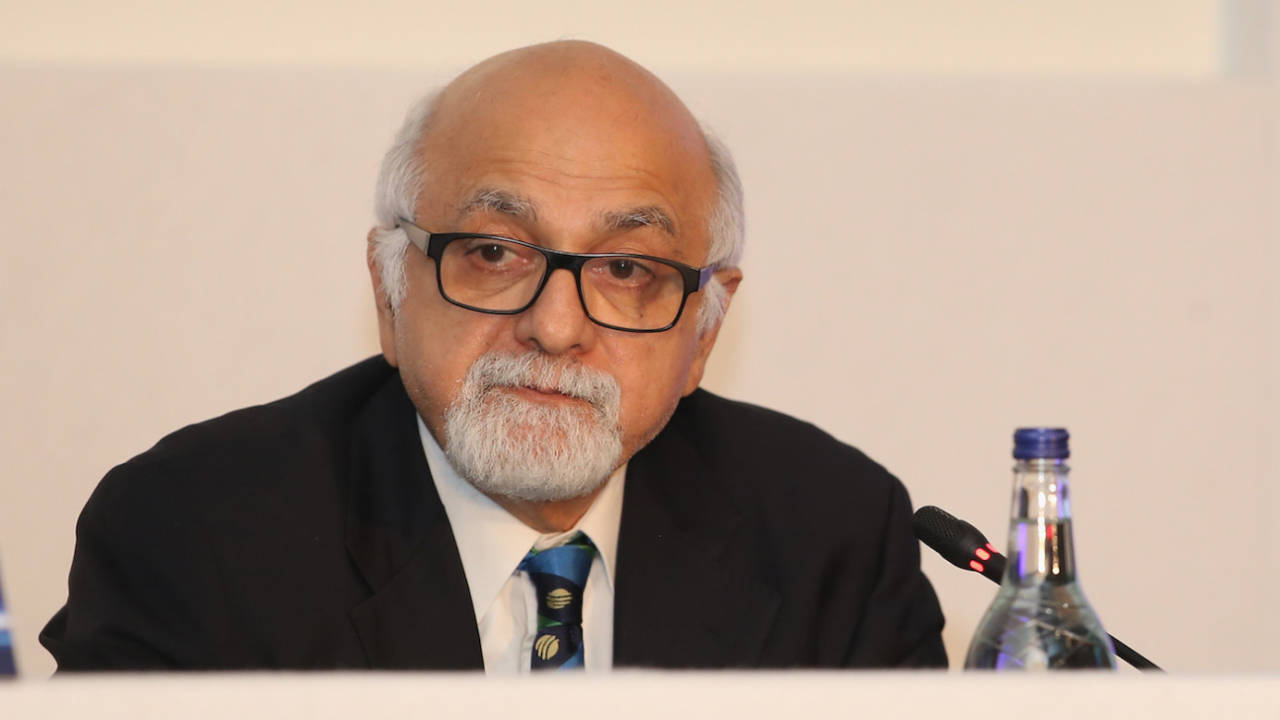
Imran Khwaja’s Era Ends: A Look Back at Two Decades on the ICC Board
The curtain has fallen on a distinguished nearly two-decade-long career for Imran Khwaja, the senior Singapore cricket administrator, whose role as an Associate director on the ICC Board has officially come to an end. This significant development follows his recent loss in a closely watched election. Consequently, Khwaja, who first secured a seat on the ICC Board in 2008, will also relinquish his position as deputy chair after the ICC’s annual general meeting concludes this week. His departure marks a notable shift in the leadership landscape of international cricket governance.
Understanding the ICC Board and Associate Member Representation
The structure of the International Cricket Council (ICC) Board mandates specific protocols for its appointments. According to the ICC constitution, only a current director can be selected by the Board to serve as deputy chair. Khwaja initially assumed this pivotal role in 2017 and was re-elected for another term in 2024, underscoring the trust and respect he commanded within the cricketing fraternity. The ICC’s main Board comprises 16 members, with three crucial spots reserved for Associate representatives. Elections for these three positions are a biennial event, held during the ICC annual conference, with each successful candidate serving a two-year tenure.
A Highly Contested Election and Its Outcomes
The recent elections for the Associate representatives proved to be particularly intense, reflecting the growing importance and competitive nature of these roles. Imran Khwaja was among five formidable contenders vying for the three available spots. The field included two other incumbent directors, Mubashshir Usmani from the Emirates Cricket Board and Mahinda Vallipuram of the Malaysia Cricket Association, who were also seeking re-election. Joining them were two new faces making their first bid for a seat: Gurumurthy Palani representing France Cricket and Rudie van Vuuren from Cricket Namibia.
Behind-the-scenes lobbying and extensive canvassing for support among candidates had been ongoing for some time, casting a competitive shadow over the start of the Annual General Meeting, which this year took place in Edinburgh. The voting process involved 43 eligible votes from Associate Members. The results saw Gurumurthy Palani emerge as the top vote-getter with an impressive 35 votes. He was followed by Mubashshir Usmani and Rudie van Vuuren, both securing 26 votes each. Imran Khwaja received 23 votes, placing him three votes behind the elected trio, while Mahinda Vallipuram finished last with 19 votes. As a direct consequence of his election to the Board, Palani will now vacate his previous seat on the ICC’s chief executives committee, a position he had held as one of the two Associate representatives since last year.
The Legacy of Imran Khwaja: A Surprise Exit
Given his unparalleled tenure and extensive experience, Khwaja’s exit from the ICC Board is widely regarded as a significant surprise within cricketing circles. A former president of the Singapore Cricket Association, Khwaja’s journey on the ICC Board began in 2008. He initially served as a representative and later ascended to the prominent role of chair of the Associate Members. His influence was so pronounced that in 2020, following the resignation of his close ally Shashank Manohar as the ICC’s first independent chair, Khwaja himself contested for the top leadership position. Despite his considerable credentials, he suffered a bruising defeat across two rounds to New Zealand’s Greg Barclay, a testament to the fiercely competitive nature of top-tier cricket politics.
A Master Negotiator and Diplomat: Khwaja’s Key Contributions
Regardless of the outcome of the chairman’s election, Khwaja continued to occupy several significant positions within the ICC, proving indispensable in various capacities. As a highly respected lawyer specializing in dispute resolution, Khwaja brought a wealth of legal and diplomatic experience to the ICC’s often complex and politically charged environment. He was frequently appointed as a mediator in intricate situations, leveraging his exceptional negotiating skills to navigate challenging scenarios. His diplomatic prowess was particularly evident during the high-stakes stand-offs between the Board of Control for Cricket in India (BCCI) and the Pakistan Cricket Board (PCB) ahead of both the 2025 Champions Trophy and, more recently, the 2026 men’s T20 World Cup. On both occasions, Khwaja played a critical role in diffusing potentially volatile situations that could have jeopardized these major global events.
Ahead of the Champions Trophy, Khwaja was instrumental in guiding both boards towards an agreement on a hybrid model. This innovative solution stipulated that both countries would play their matches at neutral venues during global tournaments hosted by either India or Pakistan, thereby circumventing political tensions. Earlier this year, Khwaja represented the ICC in crucial discussions with the Pakistan government. His intervention paved the way for the PCB to ultimately retract its boycott call, ensuring Pakistan’s participation in the T20 World Cup. Beyond these high-profile inter-board disputes, Khwaja also spearheaded a task force dedicated to addressing the sensitive issue of Afghan women’s cricketers, engaging directly with the Afghanistan Cricket Board and representatives from the country’s ruling Taliban government to chart a forward path.
Acknowledgements and Future Outlook
In a statement acknowledging Khwaja’s extensive contributions, ICC Chairman Jay Shah expressed his gratitude and congratulated the newly elected members.