England vs India: All you need to know about the first ever Women’s Test at Lord
Contents
A Historic Milestone at the Home of Cricket
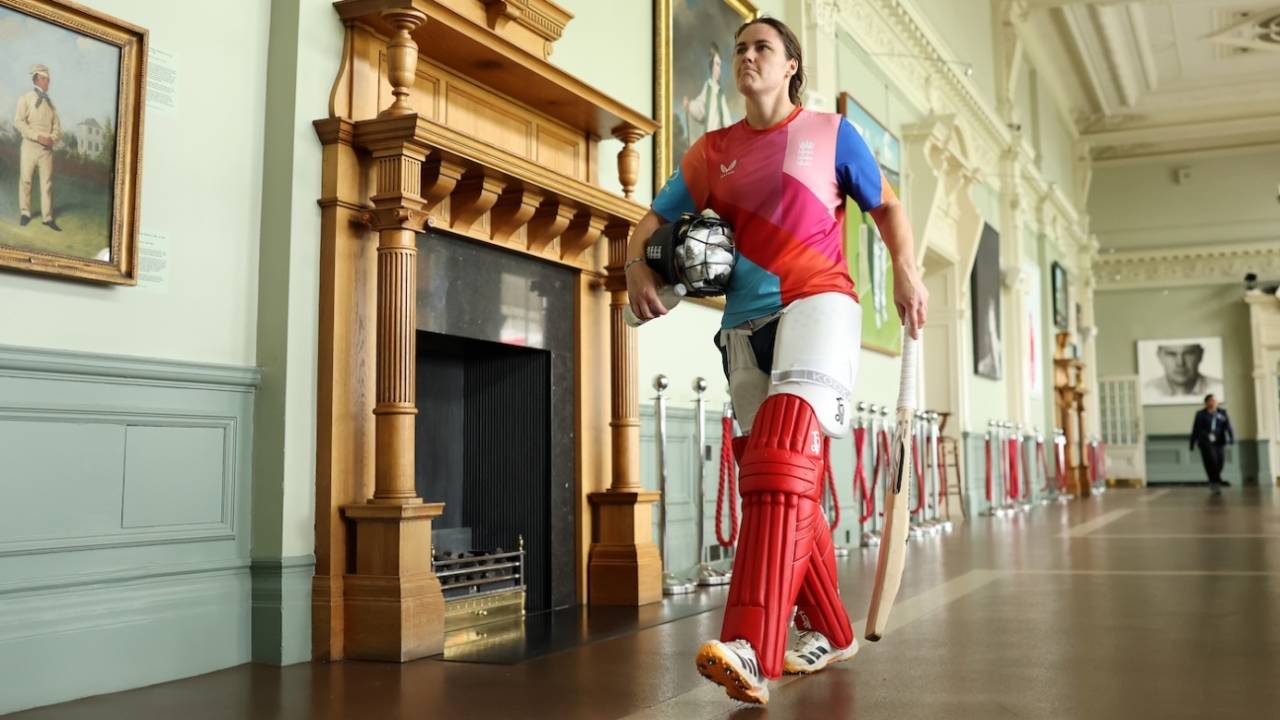
For the first time in cricket history, a women’s Test match will be played at Lord’s. The highly anticipated fixture between England and India, starting this Friday, represents a monumental moment for the sport. This historic event comes a staggering 142 years after the first men’s Test was played on the legendary ground. While England Women have played 55 Test matches across 19 different venues throughout the country since 1937, Lord’s will officially become the 20th venue to host them in the longest format.
The Road to a Landmark Match
The journey to securing this fixture at Lord’s was catalyzed by significant off-field developments. In June 2023, while England was playing their last home Test match at Trent Bridge, the Independent Commission for Equity in Cricket (ICEC) published a scathing report. The commission labeled the fact that England had never hosted a women’s Test at Lord’s as “truly appalling” and pointedly noted that the “home of cricket” remained principally a home for men. This critical review served as a powerful wake-up call, prompting administrators to take swift action and schedule this historic Test.
How Women’s Tests Differ from Men’s Tests
While the essence of the game remains the same, there are notable structural differences between men’s and women’s Test matches. The most significant difference is that women’s Tests are played over four days rather than five. To accommodate this shorter duration, teams are required to bowl a minimum of 100 overs per day, compared to the 90 overs required in men’s Tests. Additionally, the follow-on target is set at 150 runs instead of 200.
To date, only two five-day women’s Tests have ever been played. The most recent was the 2023 Trent Bridge Test during the Ashes, which Australia won by 89 runs. The players involved highly praised the addition of a fifth day, expressing a strong preference for the extra playing time to force definitive results.
Analyzing Recent Form and Team Preparation
Both teams enter this historic match after contrasting experiences on the international stage. During the 2026 Women’s T20 World Cup, England and India competed in different groups. India failed to qualify for the semi-finals after suffering crucial group-stage defeats to Australia and South Africa. England, on the other hand, made it all the way to the final but suffered a disappointing loss to Australia right here at Lord’s.
In the red-ball format, India’s sole red-ball outing this year was a pink-ball Test in March at the WACA in Perth, where they fell to a 10-wicket defeat against Australia. This loss marked India’s first defeat in 10 Test matches dating back to 2006. Prior to that, India did not play any Test matches in 2025, and played just one in 2024, when they convincingly defeated South Africa by 10 wickets in Chennai.
England may find themselves slightly rustier in the multi-day format. Their last Test appearance was in January 2025, which ended in a heavy defeat against Australia at the Melbourne Cricket Ground (MCG). Furthermore, England’s recent red-ball record is cause for concern, having secured just one victory in their last ten Test matches stretching back to 2015.
Head-to-Head History Favors India
While England enjoys home-soil familiarity, the historical head-to-head record leans surprisingly in India’s favor. The last Test meeting between these two sides took place in December 2023 in Navi Mumbai, where India dominated to secure a massive 347-run victory. In fact, India has won three of their last four Test encounters against England, though these fixtures date back to 2006.
There are also some highly encouraging statistics for the visitors: India has not lost a Test match to England since 1995. Even more impressively, India remains undefeated in all nine Tests they have played in England, recording two victories and seven draws.
Their last Test victory on English soil occurred at Wormsley in 2014, a landmark match where Smriti Mandhana scored a crucial half-century on Test debut to guide India through a successful run chase. That victory was particularly remarkable because India had not played a Test match for eight years prior, and their starting XI featured eight debutants, including current captain Harmanpreet Kaur. At that time, women’s cricket in India was still years away from professionalization, whereas England’s players had transitioned to full-time professional contracts just months earlier. In preparation for this week’s historic clash at Lord’s, the Indian squad held several training sessions at that very same venue in Wormsley.
Squad Dynamics and New Faces
While the core of both squads consists of the players who featured in the recent T20 World Cup—with Nat Sciver-Brunt leading England and Harmanpreet Kaur captaining India—both teams have introduced fresh talent. Across the two squads, there are eight players who are entirely new to the Test match environment.
For India, three uncapped players have been included: batter Harleen Deol, left-arm spinner N Shree Charani, and fast bowler Nandani Sharma, who made her international white-ball debut just before the T20 World Cup. Additionally, seamer Sayali Satghare, who made her Test debut against Australia, is in the squad and could thrive under the local London conditions.
England has handed maiden Test call-ups to five players: batter Alice Capsey, wicketkeeper Eleanor Threlkeld, seamer Grace Potts, spin allrounder Mady Villiers, and 18-year-old left-arm spinner Tilly Corteen-Coleman. Notably, England’s premier offspinner and white-ball vice-captain Charlie Dean has been rested for this fixture as part of a workload management strategy.
Key Players to Watch
Beyond the established stars, several selection dilemmas and potential game-changers will shape the contest. For England, all eyes will be on whether they decide to unleash Lauren Filer, one of the fastest bowlers in the country who did not feature in the T20 World Cup, alongside the high-pace option of Issy Wong.
For India, the primary selection question surrounds batter Pratika Rawal, who starred in India’s ODI World Cup triumph last year. Earning a spot in the top order will be highly competitive, with Shafali Verma, Jemimah Rodrigues, Yastika Bhatia, and the uncapped Harleen Deol all vying for positions. On the bowling front, India’s selectors must choose two frontline seamers from Renuka Singh, Kranti Gaud, and Nandani Sharma, with Sayali Satghare’s batting capability potentially giving her an advantage as the primary seam-bowling allrounder.