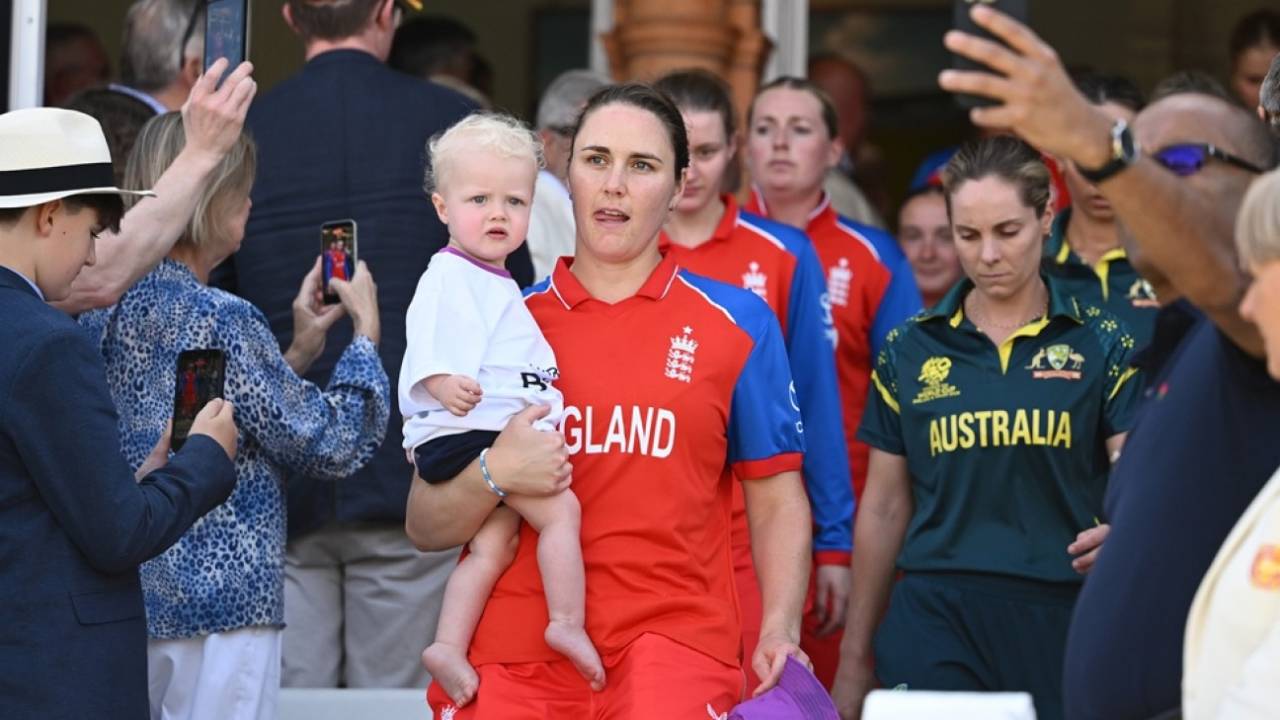
When England captain Nat Sciver-Brunt carried her 15-month-old son, Theo, out with her to sing the national anthem at Lord’s, she was acutely aware that they were sharing a once-in-a-lifetime experience. With the famous old ground bathed in sunshine and nearly 30,000 fans roaring, she knew this was a fleeting pinnacle. “I probably won’t play in a home World Cup again, so having the opportunity to bring Theo out was really special,” she reflected afterward, unable to hold back her tears. It was clear that this ‘Special’ final a bittersweet moment for Nat Sciver-Brunt was more than just a cricket match; it was the culmination of a deeply personal journey of sacrifice, leadership, and resilience.
The sheer weight of the moment caught up with her as she bowed her head, hiding her face beneath her cap to wipe away tears. In those quiet seconds amid the post-match noise, the events of a whirlwind tournament replayed in her mind. Her day had begun under flawless blue skies with her son on her hip, surrounded by the affectionate roar of a home crowd. It ended in the cool twilight, with fireworks leaving pale pastel smoke hanging in the air to the sounds of “Rockabye,” while the World Cup trophy was held aloft by another team. It was not the fairytale ending she or the 28,887 spectators at Lord’s had envisioned, but it was a day etched permanently into the annals of English cricket.
Contents
From Edgbaston Brilliance to Injury Heartbreak
To understand the depth of emotion Sciver-Brunt felt, one must look back to the start of this campaign just 23 days prior at Edgbaston. There, England set the tournament alight by amassing a record-shattering 219 for 1, thoroughly dismantling Sri Lanka by 87 runs. Having suffered the heartbreak of missing out on the semi-finals two years ago on net-run rate, England were determined to leave absolutely nothing to chance. Sciver-Brunt led by example, blasting a blistering 46 off just 22 deliveries, operating at a strike rate of over 200. It was a statement of intent that echoed across the cricket world.
“The first few games were really special,” she recalled, managing a faint smile. “The first game in Birmingham was a real highlight, obviously not having come off too much cricket myself, but to be part of that and feeling really great about my injuries. It was such a special day, and kickstarted a brilliant tournament.”
However, the euphoria was short-lived. Just four days later, during a group match against Ireland, disaster struck. Sciver-Brunt felt a painful recurrence of the calf injury that had severely disrupted her tournament build-up. Forced to retire out, she watched her campaign head toward a potential derailment. The injury sidelined her for what was supposed to be one or two matches, which quickly stretched into three. Behind closed doors, she threw everything into her rehabilitation, desperate to return for the knockout stages.
The Mental Battle of a Sidelined Leader
The physical rehabilitation was only half the battle; the mental toll of managing her recovery while captaining a World Cup squad was immense. The uncertainty of whether she would feature again in the tournament weighed heavily on her shoulders.
“An injury during a World Cup hasn’t been easy,” Sciver-Brunt admitted. “I always wanted to try and remain positive around the group and not let on too much about how I was feeling most days, but missing those games was pretty tough.”
Despite the looming threat of missing the entire tournament, she persevered. Backed by intensive magnetic resonance therapy and remarkable personal grit, she was sensationally passed fit for the high-stakes semi-final clash against South Africa. What followed was a masterclass in resilience that surprised even the captain herself.
A Heroic Return Against South Africa
Walking out with England reeling at a precarious 23 for 3, Sciver-Brunt combined with former captain Heather Knight to stage a magnificent rescue mission. Together, they rebuilt the innings to guide England to a competitive 169 for 5. It was not just the runs they scored, but the authoritative manner in which they dismantled a South African side that had previously eliminated them from two of the last three major ICC tournaments. Her sharp running between the wickets and energetic leadership in the field showed no signs of the calf injury that had threatened her tournament. “I was just immensely proud of what I was able to do,” she said of her match-winning performance, which secured England’s first T20 World Cup final appearance since 2018.
The Grand Finale at Lord’s
That hard-fought journey is precisely why walking out at Lord’s with Theo and hearing the roaring support of nearly 30,000 passionate fans meant so much to Sciver-Brunt. However, the final proved to be a grueling battle. On a tricky pitch where scoring proved incredibly difficult, Sciver-Brunt found herself fighting for every run, unable to break free at more than a run-a-ball. England fought hard to post a total they believed could be defended on a wearing surface, hoping 150 would suffice.
But the clinical Australian duo of Beth Mooney and Phoebe Litchfield had other plans. As they systematically chased down the target, England’s head coach Charlotte Edwards had to balance the painful reality of losing a final with the profound significance of the occasion. Edwards spoke passionately about the emotional rollercoaster of the afternoon.
“I’m passionate, I love what I do, and I care so much about this team. That’s probably one of my strengths, but the emotions are really hard,” Edwards reflected. “You sit there in front of 28,000 people and you can only smile. You just want a good game of cricket. It’s probably not the final we wanted, but I sat there incredibly proud. And frustrated at times. My overriding emotion is ‘wow.’ This is an important day for women’s cricket in this country and to play a part in that is something that I will remember for the rest of my life.”
Looking Ahead: Family, Legacy, and the Future
Even as the trophy slipped from her grasp, Sciver-Brunt recognized the broader impact her team had made. Reflecting on the legacy of England’s historic 2017 World Cup win, she noted how the cycle of inspiration continues. “We know from 2017 there are people in the crowd who are now in the England side, which is incredible,” she remarked. “You never know who will be the next person to have been inspired by what we’ve been able to do, and become more motivated to live their dreams. That has been a really special part of this tournament.”
While she has accepted that this will likely be her last home World Cup—with the 2028 edition scheduled for Pakistan and future venues undecided—Sciver-Brunt is not ready to say goodbye to the international stage just yet. When asked about her future, her resolve was clear. “I don’t want it to be my last World Cup. I don’t even know when the next one is, so I haven’t even put some thought into that at all. Obviously, family is everything. The support that we get from our families, our team, our supporters, it all just means so much, I guess that’s why the emotions are high.”
As she left the iconic ground, the chants of her family still echoing from the stands, Sciver-Brunt headed back to the team hotel where her wife Katherine and son Theo awaited her. She may not have walked away with the World Cup trophy, but with her family by her side and a lasting legacy secured, she has won something far more enduring.