Mumbai Indians Struggle: Jayawardene Points to Powerplay Failures After Heavy CSK Loss

Contents
A Night of Despair at Wankhede: MI’s Struggle for Consistency
The Wankhede Stadium has long been a fortress for the Mumbai Indians (MI), but their recent encounter with the Chennai Super Kings (CSK) felt more like a siege. A devastating 103-run hammering has left MI languishing in the bottom half of the points table with only two wins from seven matches. For head coach Mahela Jayawardene, the result was a stark reflection of a season defined by inconsistency and tactical gaps.
Speaking after the match, Jayawardene did not mince words regarding the team’s current state. He pointed toward a significant “hole” in the bowling department—a void that the team is still desperately trying to fill. While injuries and illnesses have played a role in disrupting their combinations, the lack of execution on the field has become the more pressing concern.
The Bowling Crisis: Bleeding Runs and Missing Wickets
The statistics tell a grim story for the Mumbai franchise. MI currently concedes runs at an economy rate of 10.52, the highest of any team in the tournament this season. When a team allows runs at such a rate, the pressure shifts entirely onto the batsmen to overperform, leaving very little margin for error.
Beyond the runs conceded, the ability to take wickets has vanished. With only 34 wickets picked up so far, MI ranks as the third-lowest wicket-taking side. Even the talismanic Jasprit Bumrah, usually the cornerstone of any MI attack, has found wickets hard to come by, claiming just two in seven outings. Although Bumrah remains one of their most miserly bowlers, his inability to break partnerships has put immense pressure on the supporting cast.
Jayawardene highlighted the issue of “big overs” as a turning point in their games. “If you analyse the seven games, yes, there was a hole in our bowling… consistency-wise, I think we are one of the teams that has given the highest number of big overs—18-plus overs,” he noted. He emphasized that giving away 20-plus runs in a single over makes it nearly impossible for a team to claw their way back into a contest.
Tactical Shifts and the Powerplay Disaster
The inconsistency has forced MI to experiment with their personnel, often abandoning pre-planned match-ups. Early in the season, Trent Boult was the spearhead of the new-ball attack. However, a lack of early wickets and a rising economy rate forced a tactical pivot. MI has increasingly relied on Bumrah to bowl in the powerplay—often taking two overs upfront—rather than saving him for the death overs.
“Booms [Bumrah] we thought we needed some experience up front to take the new ball, because where we were lacking was we were not setting a tone with the first over itself,” Jayawardene explained. This strategy was an attempt to stop the trend of conceding 10 to 13 runs in the very first over.
Against CSK, however, the powerplay was a disaster on both fronts. The contrast was staggering: CSK posted 73 for 2 in their first six overs, while MI managed a meager 29 for 3 during their chase of 208. This marked MI’s lowest powerplay total against CSK in IPL history. The inability to counter Akeal Hosein with the new ball effectively ended the match before it had truly begun.
The Concussion Substitute Controversy
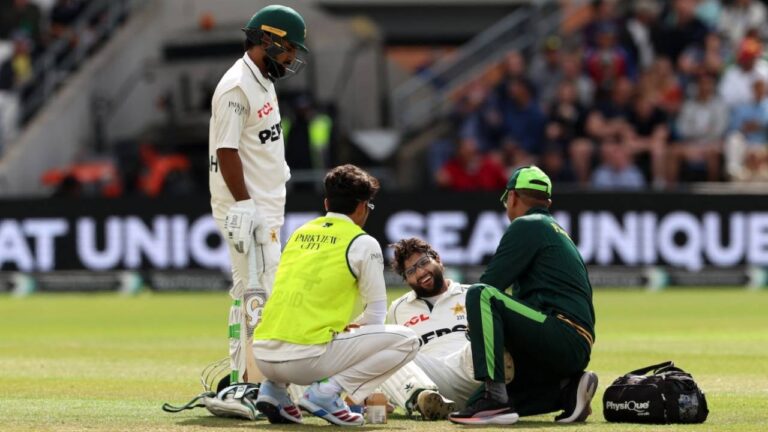
The match was also marked by a moment of confusion when Mitchell Santner was replaced by Shardul Thakur as a concussion substitute. Santner had walked off the field grimacing after a diving catch to dismiss Kartik Sharma. While the initial sight suggested a shoulder injury, Jayawardene clarified that Santner suffered from dizziness and instability after hitting his head and neck.
“He went for a scan because once he got back, he felt dizzy… we requested [for a concussion substitute],” Jayawardene said. While the move was approved by the match referee and umpire, the coach added a touch of levity, noting that Santner would likely be disappointed that his batting contributions were replaced by those of Shardul Thakur.
A Glimmer of Hope: The Rise of AM Ghazanfar
Amidst the gloom, the emergence of AM Ghazanfar provided a rare silver lining. Despite CSK scoring at over ten runs per over, Ghazanfar remained composed, returning figures of 2 for 25. His wickets of Ruturaj Gaikwad and Shivam Dube showcased a maturity beyond his years.
Jayawardene praised the youngster, stating, “I think Allah [Ghazanfar] bowled well… he’s proven to be quite mature for his age. The more games he’s playing, he will do well.” For a team struggling for identity, the confidence of a young spinner could be the spark MI needs to rediscover their rhythm.
Mumbai Indians now enter a five-day break to regroup and strategize before they face Sunrisers Hyderabad at the Wankhede Stadium on April 29. For the MI camp, the goal is clear: find a consistent bowling length and regain the rhythm that once made them the most feared team in the league.