Punjab Kings Make History: Brathwaite Critiques DC’s Tactics in Record 264-Run Chase


Contents
A Night of Historic Proportions
Cricket has witnessed many breathtaking chases, but what transpired on Saturday evening was nothing short of legendary. The Punjab Kings (PBKS) have etched their name into the history books by successfully chasing down a mammoth target of 264, marking the highest successful chase in the history of T20 cricket. Despite the Delhi Capitals (DC) posting a formidable total, PBKS reached the target with seven balls to spare, leaving the DC camp searching for answers.
The Powerplay Carnage: Where the Game Was Won
The foundation of this historic victory was laid in the first six overs. In a display of absolute aggression, openers Prabhsimran Singh and Priyansh Arya piled on a staggering 116 runs during the powerplay. This stands as the second-highest powerplay score in the history of the IPL, and its impact on the match dynamics was immediate and devastating.
At the start of the innings, the required run rate stood at a daunting 13.25 per over. However, the sheer velocity of the opening assault chopped that figure down to a far more manageable 10.50 after just six overs. By the time the first partnership was broken, the psychological pressure had shifted entirely from the batting side to the bowling attack.
Brathwaite’s Tactical Breakdown: A Lack of Proactiveness
Speaking on ESPNcricinfo’s TimeOut show, Carlos Brathwaite offered a critical analysis of the Delhi Capitals’ approach. While DC had the runs on the board, Brathwaite argued that the team failed to be “proactive” with the ball, allowing the game to slip away far too early.
The critique centered largely on the captaincy of Axar Patel. In the critical opening window, Axar entrusted four of the first five overs to Auqib Nabi and Mukesh Kumar. The result was catastrophic; the duo conceded 87 runs at a blended economy of 21.75. Even Axar’s own contribution in the third over leaked 20 runs, further fueling the PBKS momentum.
Brathwaite pointed out that the DC management played it too safe when they should have been attacking the rhythm of the batters. “When you bat and score 200-and-a-lot, you don’t need to be necessarily defensive but have a mindset that ‘this can be scored’,” Brathwaite noted. He specifically highlighted the underutilization of T Natarajan and the delayed introduction of Kuldeep Yadav.
The ‘What If’ Scenario: Strategic Missteps
According to Brathwaite, the game could have looked very different had DC utilized their strike bowlers more effectively in the powerplay. While T Natarajan was the only bowler to keep the scoring in check (conceding only nine runs in his powerplay over), he was only used once during the first six overs. Meanwhile, the spin wizardry of Kuldeep Yadav was introduced as late as the eighth over—by which time the set batters had already propelled PBKS to 127 runs.
“Get Kuldeep on early. He may not get a wicket, but he may stem the flow of runs for an over,” Brathwaite suggested. He argued that if Natarajan and Kuldeep had bowled three of the first six overs, PBKS might have been restricted to around 65 runs in the powerplay, which would have left the chase in a much more precarious position.
The Ripple Effect on the Middle Order
The lack of early pressure didn’t just help the openers; it paved a golden path for Shreyas Iyer. Coming in at No. 4 after the openers fell in the seventh and eighth overs, Iyer was able to settle in without the burden of an astronomical required rate. He eventually finished unbeaten on a composed 71 off 36 balls.
Brathwaite explained that the early onslaught allowed Iyer the luxury of a slow start. “They did so much in the powerplay that when Shreyas came in, he could be eight off his first eight balls,” he said. “That would never be possible if you need to score 19 or 20 per over; then everybody has to come in and go.” He concluded that DC failed to structure their game to push the required run rate up to 20-22 per over, which is often the only way to defend such massive totals.
More Than Just Hitters: The Technical Brilliance
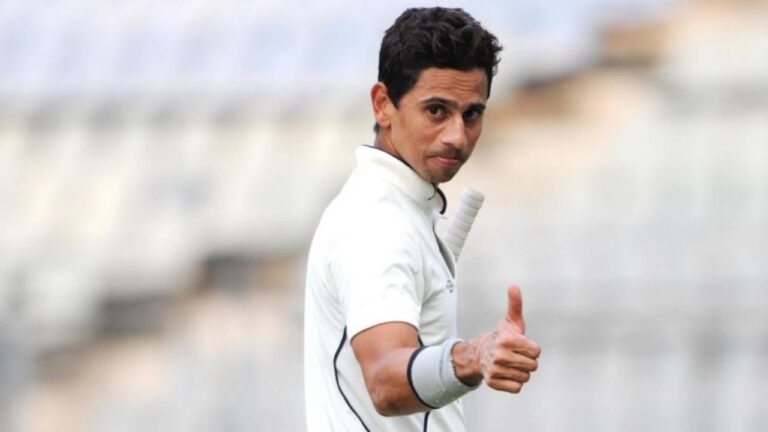
While Brathwaite focused on the tactical failings of DC, Deep Dasgupta focused on the technical proficiency of the PBKS openers. Prabhsimran Singh (76 off 26) and Priyansh Arya (43 off 17) were described as more than just “hitters.”
Dasgupta argued that the pair weren’t playing “fancy” or “muscled” shots, but rather executing normal cricketing shots with extreme precision. “The beauty about that opening pair was about how easy they made it look,” Dasgupta remarked.
Brathwaite echoed this sentiment, praising Prabhsimran’s versatility. He noted that Prabhsimran’s ability to read the bowler—charging down the track to negate slower balls or walking across the crease to use the pace—put the DC bowlers in a state of mental surrender. “As a bowler, when you get into a mindset of thinking ‘I don’t want to bowl this’, the batter is ready,” Brathwaite added, perfectly summarizing the psychological dominance the Punjab Kings exerted over the Delhi Capitals.