Arjuna Ranatunga Critiques T20 Cricket: Fast Food vs. Wholesome Test Cricket

Contents
The Evolution and Impact of T20 Cricket
T20 cricket has fundamentally altered the complexion of the sport. Once viewed as a game of patience, long tactical battles, and strategic slow-builds, cricket underwent a massive transformation with the arrival of the shortest format. Suddenly, the demand shifted toward high-octane entertainment from the very first ball. This transition redefined how fans interact with the sport, prioritizing immediate gratification over the slow-burn narratives of traditional formats.
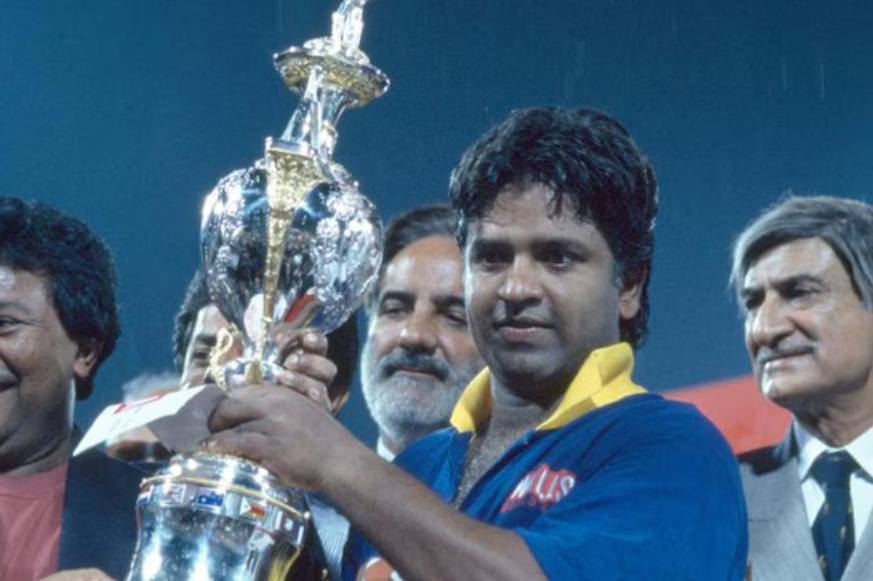
Arjuna Ranatunga captained Sri Lanka to victory in the 1996 Cricket World Cup. (Credits: ICC/Twitter)
The T20 format fits seamlessly into the modern lifestyle, providing intense excitement within a few hours. This is undoubtedly a primary driver behind its rapid global explosion. Contemporary audiences, often pressed for time, struggle to invest in the five-day slog of Test cricket or even the full-day commitment of an ODI. Furthermore, franchise cricket has cultivated a new fan culture, fostering emotional attachments to teams and individual superstars across international boundaries.
Financial Prosperity vs. Sporting Integrity
Financially, the impact of T20 cannot be ignored. Cricket boards have seen their revenues soar, and players have gained life-changing opportunities that were previously unimaginable. Additionally, franchise leagues have acted as incubators for talent in smaller cricketing nations, allowing young players to showcase their skills on a global stage. However, this growth has come at a cost, as the sport has become increasingly dependent on entertainment value to sustain its popularity.
The “Fast Food” Analogy: Ranatunga’s Perspective
Former Sri Lankan captain Arjuna Ranatunga recently provided a poignant comparison that captures the tension between the formats. He famously remarked: “T20 cricket is like fast food—attractive, enjoyable, but not very healthy. Test cricket is like a home-cooked meal prepared with love by a mother—wholesome, nourishing, and beneficial in the long run.”
This analogy highlights a growing concern among traditionalists: the erosion of the craft. In the current T20 landscape, batters often look to attack every delivery, while bowlers are frequently forced into a survival mode rather than exercising dominance. The prevalence of flat pitches, short boundaries, and high-scoring matches has skewed the game heavily in favor of the willow. Patience, once the hallmark of a great cricketer, appears to be disappearing from both the playing field and the spectator stands.
The Decline of Tactical Patience
The modern cricket environment demands constant action. If a game slows down for even a few overs, the audience engagement levels often drop significantly. This creates immense pressure on players to manufacture excitement, which often comes at the expense of technical depth. In contrast, Test cricket remains the true test of a player’s character and skill. A bowler must labor for wickets over long, taxing spells, and batters cannot rely on flashy shots or aggressive intent alone. Success in the longest format requires a foundation of resilience and sound technique.
The Future of the Sport
It is impossible to deny that T20 cricket is essential for the modern game. It has successfully brought millions of new fans into the fold and provided the financial scaffolding for cricket to survive in a competitive global entertainment market. However, there is a legitimate fear that if the sport drifts too far toward noise, speed, and manufactured excitement, it may lose its soul.
As the cricketing world balances the necessity of T20 revenue with the legacy of Test cricket, the message from legends like Ranatunga serves as a vital reminder. While the “fast food” of T20 is undeniably attractive and necessary for growth, the “wholesome meal” of Test cricket must be preserved to ensure that the sport remains nourishing and beneficial for generations to come. The challenge lies in ensuring that the love for the game does not get lost in the pursuit of the next highlight reel.