BBL Privatization Explained: Cricket Australia’s Strategy and State Resistance

Contents
The New Roadmap for BBL Privatization
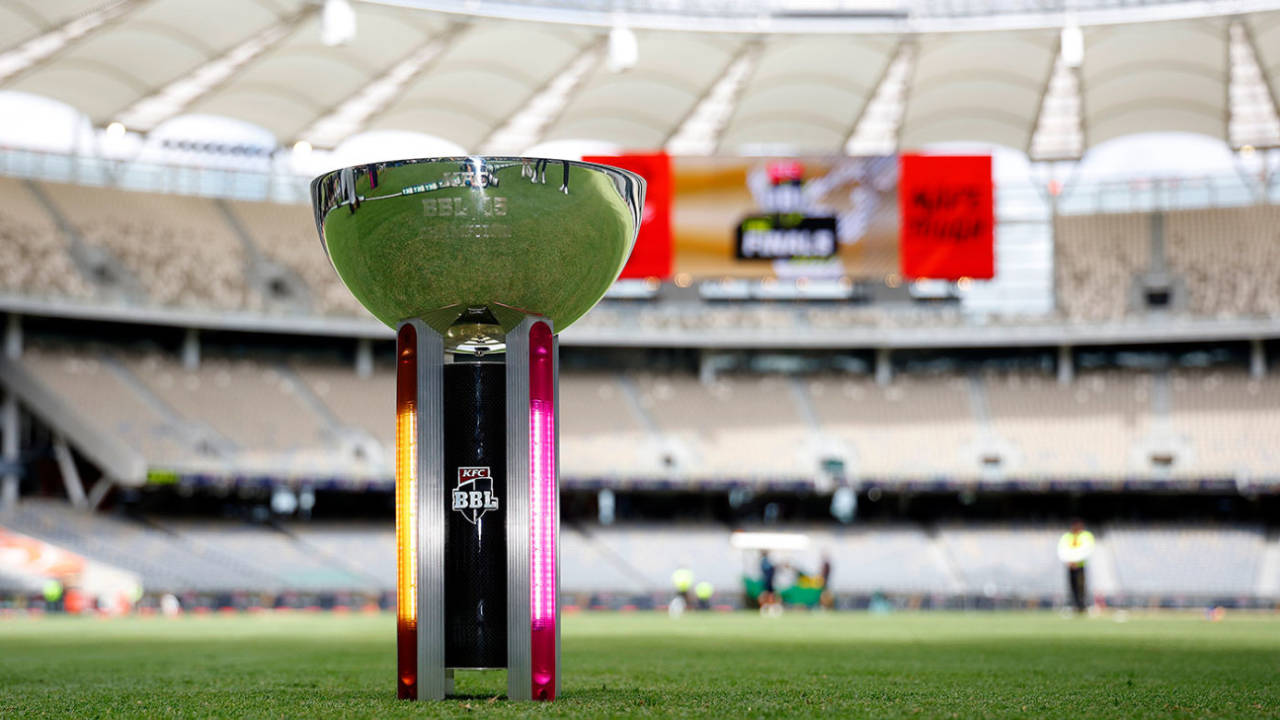
The landscape of Australian cricket is on the verge of a seismic shift as Cricket Australia (CA) pivots its strategy for the privatization of the Big Bash League (BBL). Following a week of internal friction where New South Wales (NSW) and Queensland effectively stalled the original unified rollout, CA is now set to test the market on a more selective basis. The focus has shifted to the Melbourne Renegades, Perth Scorchers, and Hobart Hurricanes, as CA seeks to determine the true global market value of its T20 assets.
While the initial goal was to put all eight franchises up for sale simultaneously, CA Chief Executive Todd Greenberg has acknowledged that a one-size-fits-all approach is no longer viable. Instead, CA is adopting a tiered strategy, allowing ‘early adopter’ states to proceed while others maintain their current operating models. This move is designed to create a proof of concept that could eventually entice the holdouts.
Understanding the Assets: What Is Actually for Sale?
One of the primary points of confusion surrounding this process involves the ownership structure of the teams. It is a common misconception that the state associations own the BBL franchises. In reality, Cricket Australia owns all eight brands, while the states currently hold 30-year leases to operate them. These leases are exactly halfway through their lifespan, having been signed when the competition launched 15 years ago.
The Stake Breakdown: Control vs. Capital
The current proposal offers states the opportunity to sell between 49% and 75% of their franchises to private investors. In specific cases, such as Victoria and NSW, there is an option to sell 100% of their secondary franchise (the Renegades and Thunder, respectively). The mechanics of the deal are as follows:
- Minority Stakes (49%): The state retains 51% ownership and total control over cricket operations, ensuring that the developmental pathways and team culture remain under the purview of local authorities.
- Majority Stakes (Over 50%): Private investors would gain a more significant voice in the running of the team, though they would still operate within the regulatory framework set by CA.
- The Financial Windfall: States that sell a portion of their lease would receive a cash injection from CA, representing an agreed-upon percentage of the total sales pool. However, future revenues would then be split with the new investors.
The Global Context: Lessons from The Hundred
Cricket Australia is not navigating these waters blindly. They are following a blueprint remarkably similar to the England and Wales Cricket Board’s (ECB) sale of franchises in ‘The Hundred.’ Both organizations are being advised by The Raine Group, a global merchant bank with deep experience in sports valuations.
Market testing currently suggests that BBL franchises could fetch anywhere between AUD $80 million and $180 million, depending on the percentage stake and the specific market. For comparison, teams in The Hundred like the Trent Rockets and Birmingham Phoenix were valued at approximately $150 million when selling minority stakes. The outlier remains the London Spirit, where a 49% stake was valued at a staggering $558 million due to the allure of the Lord’s home ground.
The ‘Renegades’ Variable
The Melbourne Renegades represent one of the most intriguing prospects in the upcoming market test. If Victoria opts for a 100% sale, the Renegades would become the first BBL club entirely owned and operated by a private entity. This is expected to draw significant interest from Indian Premier League (IPL) franchises, who are increasingly looking to build year-round global portfolios. A 100% owner would handle all operations, potentially even negotiating moves to iconic venues like the MCG for home fixtures.
The Great Divide: Why NSW and Queensland Said No
The resistance from New South Wales and Queensland is rooted in both financial philosophy and ethical concerns. Cricket NSW has been particularly vocal, suggesting a self-funding model that avoids reliance on outside private capital. In a letter to members, the organization emphasized its desire to optimize existing revenue streams—such as broadcasting and commercial partnerships—without increasing ties to wagering operators.
Queensland’s hesitation appears linked to the economics of player salaries. While CA views privatization as a necessary tool to keep BBL salaries competitive with the SA20 and ILT20, Queensland has expressed skepticism regarding the need for such drastic pay increases at this stage. Furthermore, there is a prevailing sentiment in some circles that the BBL is already a profitable and successful product that does not require the ‘fixing’ that privatization implies.
The Shadow of the IPL
Perhaps the most significant underlying concern involves the potential influence of IPL owners. Recent developments in the UK provide a glimpse of what could happen: three franchises in The Hundred have already been rebranded with IPL names and colors. While these owners have brought significant capital, there are fears in Australia regarding how much control foreign entities might exert over player retention, auction rules, and even the scheduling of domestic talent.
What Happens Next?
The results of the upcoming market testing will provide CA with the hard data needed to move forward. It will transform theoretical valuations into concrete expressions of interest. For the states keen on selling—Victoria, Western Australia, and Tasmania—this data will serve as the foundation for a formal auction process. For the states currently standing in opposition, the market test will be a moment of truth: will the valuations be so high that the pressure to join the privatization wave becomes irresistible, or will they find vindication in their cautious approach?